Speaker Paul Winter at Audley Clevedon
Wed, Apr 15th 2026 at 12:00 pm - 2:00 pm
We met at Audley Clevedon and the speaker told us about his involvement with the London Olympics in 2012. Speaker finder Pierre Richterich, Visitors Host Grace and Banners Mike Clewes, Cash Desk M Aslam
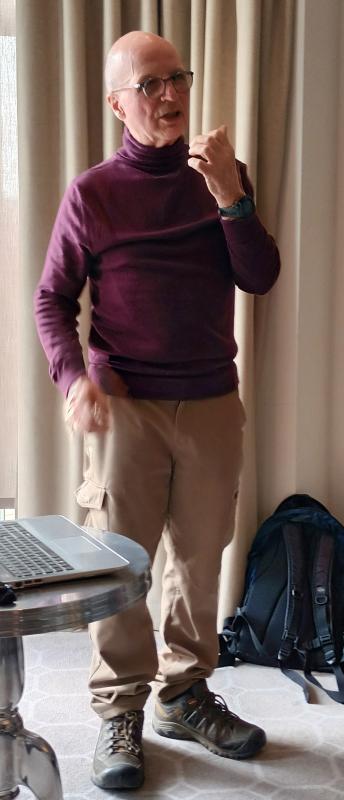
Paul said that he was originally articled for his training as a solicitor at Leeds Council where a lot of the work was planning. When he qualified he went to work for Gordons and then moved on to Hepworth and Chadwick / Eversheds in 1989. He said that he built two successful planning teams in Leeds and Manchester between 1989 and 2002. In 2002 he moved to the London office to build a planning team there. Whilst there in 2003 he was asked to advise on the London Mayor’s planning and land acquisition strategy for the bid for the 2012 Olympics.
In building his planning teams in the North he had come up with the Rochdale Principles of Planning: -
- It is no longer acceptable to treat the Environmental Impact Assessment (EIA) as an empty PR exercise
- The application scheme must be robust and have integrity as a professional assessment of all the aspects both positive and negative
- Planning permission must be tied into the planning conditions. Otherwise, the permission might be squashed by the courts
- The court case regarding Sir Robert Ogden’s Indescon Ltd exemplifies the risks of the EIA trap.
The key milestones in bidding for the 2012 games were: -
• 15/5/2003 Government confirms it is bidding.
• 15/7/2003 deadline for expression of interest.
• 18/7/2003 I.O.C. confirms candidates
• 15/11/2004 candidate bid documents have to be submitted.
• Feb/March 2005 I.O.C. inspects the bids.
• July 2005 winning bid announced.
The key challenges for the bid were: -
- The number of owners and occupiers of the land required.
- A robust EIA and the grant of planning permissions must be done in time for
- The demolition and construction phase before 2012.
- The phase of using the construction during the games.The legacy construction phase
- The legacy usage phase.
- The legacy phase must provide overwhelming justification for the project
The site was very complex to deal with: -
- 850 acres
- 1313 Freeholds
- 1443 Leaseholds
- Seriously polluted river Lea
- Massive amount of contamination
- All overhead power lines had to be buried
- There were 5 Local District Authorities to deal with
- The site was variously used for: -
- Waste disposal
- Statutory Undertakers
- TV Studios
- Site of the former Bryant and May match factory
- Kingsway Evangelic Church
- Travellers sites
There was a very limited timescale for the planning and it needed to be credible for the July 2005 I.O.C. decision.
The I.O.C. decision approving London was announced on 5 July 2005 and Paul was removed from the committee at the end of the week owing to a clash with another member of the committee on a matter not related to the Olympics. His consolation was that he was subsequently appointed to another major regeneration project linked to sport.
The perks of being involved in the project were: -
- He met with the Queen at Buckingham Palace
- He was voted top planning solicitor in the country
- He gained a reputation for competence and integrity
- He soon gained more sporting contracts.
Contact Pierre Richterich about this page:
'What We Do' Main Pages:
Coming under Community this part of the group exists to undertake environmental projects on behalf of the club.
more
This committee provides the link with Rotary Internationals main charitable trust which primarily deals with projects having a global nature.
more
Rotary is not just about doing good deeds but also about enjoying yourself and this committee organises social activities. This page contains an archive of some of our activities.
more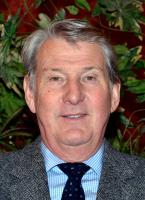
This committee works with the other committees to help them raise funds for their individual projects to support charities locally, nationally and internationally.
moreThis is the vehicle that donates the money that we have raised to the various good causes that we support. Its official name is The Rotary Club Of Bradford Blaize Trust Fund and its registered number with the Charity Commission is 514621.
moreThis committee organises social events and deals with the day to day running of the club.
moreThis committee exists to provide PR and communications between the members and also to provide links to non members through the web site and Facebook.
more