The Lord is My Shepherd
Winning Essay by Oran Kenicer
In our earliest days, none could have foreseen the life we lead now. All we knew was the great clear sky above our heads, the wind in our faces, the sweetness of the fruits, and the pungent smell of the earth in our noses. None could imagine anything other than the primordial struggle for life. The life where the simplest of pleasures was the greatest reward, and each day felt as long as the lifetime of the great trees above our heads. The life where each winter was the hardest of trials, yet no trial could diminish the beauty of the first shoots and buds of spring. Such was the life of a wild goat – no bell ever weighed down our lofty spirits nor bowed our heads towards the ground. No fence ever clipped the wings of our soaring freedom. Always there was struggle. But the struggle was worth it. For the fruits of our labours tasted all the sweeter on an empty stomach, every rest all the more rejuvenating after a hard day, every awakening all the more purposeful in the knowledge of trials to come – trials of utmost difficulty but unmatched reward.
But as the hardships persist, many of us long for a life without struggle, forgetting in the moment that such ease of access would dull the pleasure of life’s rewards. No feeding trough can ever satisfy our hunger whatever the physical nourishment it provides. For within every goat lies a hunger not of the stomach but of the soul, a deep, innate hunger only quenched by the hunt, the scavenge, and the fleeting pleasures which the struggle for life brings. And it is this nourishment of the soul which sustains us in ways the sweetest grass cannot.
It was a cold winter’s day when the hunger of the body triumphed over the needs of the soul. In those winters the trees and bushes were as bare as the cold grey sky, and the clouds of our condensed breath hung like a heavy mist, obscuring each goat from the rest of the flock. In such conditions we spoke little and never stopped moving, for in each short rest the deathly cold caught up with us. The bitter chill of the icy air and the hunger in our bellies gnawed constantly at our weak, harrowed minds. It is in this struggle, the bleak battle for survival, that the joys of spring and long lazy days of summer seem so infinitely distant. And it is the half-starved, maddened mind that, seeing only hardship, seeks the easiest solution, and will therefore make any trade for a little warmth and food.
So, when we strayed from the darkness of the bare, bleak forest we thought we were spared the jaws of starvation and the wolves that wander in our tracks. A dim glimmer of golden sunlight peeked through the clouds, illuminating the morning dew on the luscious grass into a shimmering sparkle, converting the clearing before our hungry eyes into a field of diamonds. We stood, at the edge of this pasture of promise as robbers before an unlocked vault – helplessly tainted by the prospect of a plunder too extravagant to deny, helplessly drawn forward yet dimly aware that there was no small risk in overindulgence. What starving goat could resist the prospect of grazing when all his foraging grounds were but a frozen wasteland of dark trees with heavy, leafless branches? So, we set about feasting, filling our empty stomachs with the joy of never needing to struggle for survival again.
No satisfaction, however, comes without cost. From a hut in the far end of the pasture came a man. He was a strange creature – he walked, erect and slow, like a bear, but long and skinny, a mere shadow of the great beasts of the forest. He walked with a stick in his hands and four small wolves at his feet. He told us thar we need never hunger nor break sweat nor flee the wolves again, for his land was the one island of plenty amidst a great grey sea of danger and hunger. He told us that we could satisfy evert desire simply by bowing our heads and filling our mouths with the lush green grass surrounding us. He said that should we stay with him and never leave he would provide for us and protect us, but should we leave, we would be subject once more to hardship, ad succumb eventually to the battle for survival or the wolves that haunt the forest. The field, he said, was the pinnacle of civilisation, where all activity was leisurely and all conversation intellectual. Where we never need work again, and we may feast forever, that was the field. We were promised that in the absence of hardship all our efforts could be spent on the gratification of desires and fulfilment of civilised tasks. Who would choose the primordial trials of life over the safety and plenty of paradise’s lush pasture?
So as the winter subsided to spring, we were far from the calling of birds and the blossoms and buds of the forest. But the basic pleasures of our former life could never match the excesses of the pasture: the tall grass rich and delicious, and the greatest feast only the bow of our heads away. We were no longer savages, we were sheep. We no longer wandered in search of food – we belonged somewhere. And the fatter we grew from grazing the lush fields of our new home the more we had to fear the outside, the dark woods of the life we left behind. What need have we now for these horns? The heavy curls upon our heads weigh us down in the murk of our former savagery- for now we need not fight to defend ourselves. At the first sign of conflict our shepherd and his dogs intervene – all the hot-blooded clashing of horns, the vicious stamping of hoofs and the heavy, exhilarating breathlessness of conflict is parted with a moment’s notice, with a merciless glare of contempt and an inscrutable utterance of hatred. We have all the food and security we could ever need – so why fight over it? At any conflict or question or need we simply bleat for our shepherd, and he will aid us. Our lord protects and provides – we have no need for the savage conflicts of the elder days of hardship.
One day our shepherd returned. His stick and dogs seemed a shield against the outside world, with which to defend us from its unforgiving peril. He told us he would shave our horns because we had no need for fighting. He built us a fence, because it would protect us from the marauding wolves of the forest. Once a fence would have crippled our freedom. But now the only freedom we want is the freedom to feast and the freedom from the dangers of the forest. Our shepherd now lets his dogs round us up, because by ourselves we would graze the pastures bare, and his dogs lead us to fresh feasting grounds. Our natural compulsions cannot be trusted now – trust the dogs, trust the shepherd, but instinct is folly, obedience is bliss. My ancestors feared the wolf and the fence, but each new generation is born with such an increased rapacity for grass, such insatiable desire for more that they would sacrifice any liberty to facilitate their feeding.
As our flock grew fatter, corralled inside fences we lost all the autonomy of our former lives. The only bitter reminders of our former freedom were the vestigial stumps of our horns and the shaggy coats once meant to keep out the cold. All the while our shepherd’s hut had grown into a palace, his fields into a kingdom. Not a tree remains: all that we can see is green fields all the way to the horizon. Each bird or beast that passes the lands of our shepherd is shot down with the godlike flash of lightning and the foreboding growl of thunder, rolling out across the plains. But as sheep we follow. Follow the dogs towards fresh grass, follow each other not out instinctive desire for the wild, follow our lord the shepherd when he asks for our fleeces in payment of his protection, and most of all follow our hunger for more grass to fill our unquenchable lust.
We are told just how brutish and short our lives were before we followed our lord the shepherd. We are told to desire the light of civilisation and the satisfaction of our ever-growing greed. And we follow our lord the shepherd because there are no others now living who remember that the berries we once subsisted on were far sweeter than the grass we now fill our bottomless stomachs with. None now remember the forest, for it was so beautiful that you almost wept for joy, yet these automatons would weep for nothing. If they remembered the sound of the birds crying, in a shrill aria above the hills and trees, they would not demonise our former savagery. If they remembered the smell of the first flowers and blossoms, so overpowering that on its first scent you knew you were home, for home was every glade and every stream, they would know no contention in a barren field of grass. If they remembered the nights under the leaves and the great canopy of the stars, they would know no fences nor bell around their necks. If they could remember they would know that there was no struggle not worth it – no hardship that that could diminish the simple yet profound beauty of the natural world.
But now we are naked and defenceless, for our lord has taken our horns and sheared our fleeces. We see not the wonder of our home but the prison of the pasture, yet still blind to our lord’s treachery because he feeds us all the grass we could ever want. All our wisdom and our love of nature have been washed out with the basic desire for more to feed upon. And from our greed our lord grows rich, as we are herded from field to field, he sits in his palace, swamped in affluence and his desire to tame the whole world and fleece all he can from the beauty of nature. We obey his rules and fear his wrath. We thank him for his kindness because all the plenty we enjoy is owed to him. We thank him for safety because there is now no wild left to threaten us. We simply bow our heads and feast from the sweet grass like our lord instructs. And as our loyalty to our lord and slavery to our hunger grows all bonds of friendship and family wither. Parents abandon their lambs: their heads simply bowed while the trickery of the feeding bucket lures their lambs away. And the richest of foods lure them to the sheds from which none return – yet hunger has us too subdued to notice, our gluttonous mouths so laden with grass and exhausted from munching to utter a word of protest.
Today a wolf leapt over the fence, its cruel eyes gleaming with the anticipation of food, its deadly fangs dripping with the foul juices of unstoppable hunger. We were told that there were none left because our lord had tamed all the wilderness to protect us. All the danger of the ancient world was said to be annihilated by the warmth and safety of civilisation and obedience. The lord is my shepherd, and he protects us from wolves so we may lead lives of plenty. We trust our lord the shepherd, so we have no need to flee evil nor cause to fight it. Our lord ensures we have no horns; we live in peace. So now we cannot defend ourselves. The lord is my shepherd, and he provides for us and protects us. But what capacity have we to protect ourselves? What resemblance do we bear to our ancestors? Their hard-won pleasures were far from our excesses yet were enjoyed all the greater. Now all we do is eat – never starving yet never satisfied.
We have grown so fat from the green shoots of our desire that we cannot outrun the bloodstained jaws of fate. The lord is my shepherd, and he will protect us, for we are nothing by ourselves. We are trained to merely bleat and wait for help – but what use is such reliance when the bloodshot, rapacious eyes of an unrestrained greed stare you down, ready to pounce on your every weakness? We scream and cry and flee, our underused hearts racing helplessly, our blood curdled by the piercing howl of death. Yet the lord is so distant in his marble halls and gilded chambers that he cannot hear our desperate bleating nor smell the sharp tang of blood fill the air.
Perhaps, one day, when there are no trees left and all the world is but a pasture for greed and lustful indulgence, we will realise that those who provide from us and protect us did not mean us well. Perhaps when the lifeless corpses of your own flesh and blood are torn apart by pitiless, razor-like fangs will you realise independent responsibility must never be diminished by the soothing promise of protection. Perhaps when all the world is changed, when not even the snapping of twigs nor the tweeting of a songbird nor the aroma of blossom remains to remind us of ourselves, we will realise that progress consists merely of forgetting where you belong. Perhaps when all the joys of the nature and all the simple pleasures of a pure life are utterly spent will we remember to heed the hunger of the soul not the stomach. The lord is my shepherd, and he cares not for me but basks in the glory of his wealth and our constant praise. The lord is my shepherd, and he has taken everything from us. The lord is my shepherd, and I am but a sheep.
Oran Kenicer
back to page above this...
Neil McCorkindale Creative Writing Competition 2026
back Winner of Creative Writing Competition, Oran, from Crieff High School
'What We Do' Main Pages:
Rotary Makes a Difference
more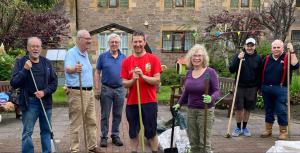
We raise money for local organisations and national charities with multiple fundraising events every year.
more


Our club has been active in Perth, Scotland since 1917 and continues to benefit our local community as much as ever.
moreHow to apply for support from us, with a form to download and return.
more