Mock Interviews Step into the Future
David Clegg gave us all an inspirational talk on the modern techniques of interviewing potential new employees to help us with our mock interviews.
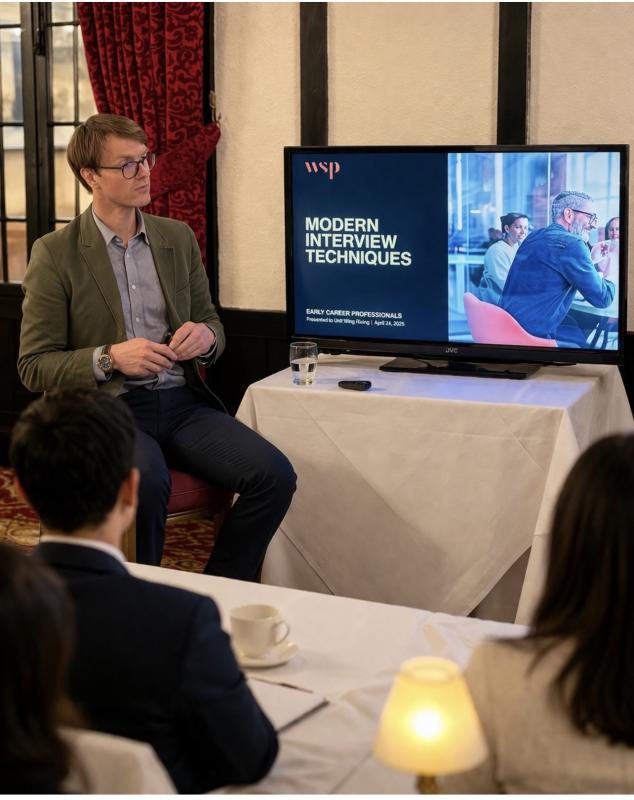
Typically, the way our organisation operates is that we meet with a client, receive a brief, and that brief defines a problem. Our role is then to develop a proposal outlining how we would solve that problem. As you didn’t provide a written brief, I’ll take a bit of licence in what I cover today.
I’ve spoken with a few colleagues beforehand, and one comment that came up was how “human resources” used to be called “personnel.” Today, HR is a broad function with several specialist areas. For example, when it comes to hiring, we have dedicated talent acquisition teams whose role is to identify and attract individuals with specific skill sets.
By way of context, I work for WSP, a global engineering consultancy headquartered in Canada. We employ around 80,000 people globally, with approximately 11,000 based in the UK and Ireland. Given our scale, we have well-defined global processes, although we must also comply with local requirements such as UK employment law—particularly in areas like onboarding.
Our primary target group is graduates, so we invest heavily in early-career recruitment. However, we also engage much earlier—often from around age eight onwards—to promote engineering as an exciting and viable career path. By the time individuals reach 12 to 14, many have already begun forming interests, so early engagement is critical.
A broader challenge we face is that some professions widely regarded as valuable are not always rewarded accordingly. For example, while there is strong societal appreciation for roles such as those in the NHS, financial rewards in other sectors may be significantly higher. Part of our role, therefore, is to promote engineering and demonstrate its long-term value and impact.
Although civil engineering is our core discipline, we operate across a wide range of sectors, including planning, digital services, healthcare, and, more recently, defence. As a result, attracting talent requires a proactive and targeted approach—we cannot rely on candidates simply finding us.
While some of what I’ll discuss is specific to our organisation, many of the principles can be adapted to other contexts, such as engaging with local schools or conducting interviews.
There are four main areas I’d like to cover today. First, I’ll focus on early career professionals—individuals taking their first steps into the workplace—and the assessment methods we use to select candidates. To put this into perspective, we typically recruit around 500 graduates annually in the UK from approximately 14,000 applicants, so the process is highly competitive.
I’ll outline the different assessment methods we use and, importantly, explain why we use multiple approaches. Recruitment today is not simply about a single interview; it involves a structured, multi-stage process designed to assess candidates fairly and comprehensively.
A key focus is ensuring fairness and accessibility. Talent is not defined solely by academic achievement—it’s about potential and the ability to contribute over time. We aim to create processes that allow individuals from all backgrounds to succeed, regardless of factors such as education, language, gender, or personal style.
In early-career recruitment, CVs are often limited in experience. Therefore, we are less concerned with what candidates have done and more interested in what they are capable of doing. Academic qualifications are typically a baseline requirement—either met or not—but beyond that, we look for potential, curiosity, and evidence of growth.
We are also seeing a significant rise in apprenticeships. Traditionally, many of our hires held master’s degrees, but degree apprenticeships now provide an alternative pathway—combining academic study with practical experience and no student debt. This route often produces candidates with both technical knowledge and real-world experience.
In addition to formal interviews, we use unstructured interactions, particularly in assessment centres. For example, when candidates arrive, we observe how they interact informally before the formal process begins. These moments can provide valuable insights into behaviour, communication, and confidence.
Our recruitment process for external candidates typically includes multiple stages: an initial application screening (often supported by AI due to volume), assessment centres for group evaluation, informal discussions, and structured interviews. For early career roles, we focus less on technical expertise and more on behaviours such as honesty, problem-solving, and the ability to learn.
We use structured behavioural interviews, often based on the STAR method (Situation, Task, Action, Result), to help candidates provide clear and consistent answers. This approach supports both the candidate—by giving them a framework—and the interviewer—by enabling fair comparison across applicants.
We also incorporate calibration questions to standardise scoring and ensure consistency across interviewers. This is particularly important when multiple assessors are involved.
Beyond technical ability, we assess alignment with organisational values. Even highly capable individuals may not succeed if their behaviours and motivations do not align with the team or company culture. Given the high cost of recruitment—often £35,000–£40,000 per hire—it’s essential to get this right.
Other methods we use include strength-based interviews, case studies, group exercises, and, for more experienced roles, technical assessments and psychometric testing. Each method serves a different purpose, helping us build a well-rounded view of each candidate.
Ultimately, we are looking for individuals who can communicate effectively, think critically, collaborate with others, and demonstrate curiosity. Technical skills can be taught, but these underlying attributes are what enable long-term success.
Finally, from a candidate perspective, preparation is key. Developing a small number of strong examples using the STAR method, preparing a concise personal introduction, tailoring applications, and asking thoughtful questions can significantly improve outcomes.
Recruitment is a two-way process. Candidates should also assess whether the organisation is the right fit for them. The most successful outcomes occur when both parties see clear alignment.
 Contact Adrian Scadding about this page:
Related pages...
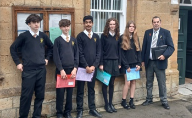
The Mock Interview Experience! 2025
more The annual event proceeded as planned, with all available students from Beaminster School, year ten, being escorted to The Public Hall in groups of five.

Rotary Mock Interviews 2025
more Interviews are set to take place at Beaminster Public Hall during November

Mock Interviews 2024
more Another Successful Year with Mock Interviews
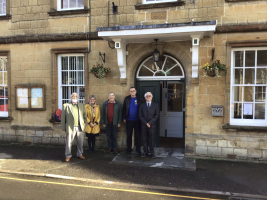
Mock Interview's 2023
more Mock Interviews 2023 were carried out at Beaminster Public Hall

Practice Interviews for young people
more Practice Interviews for young people. Club members interviewed pupils from Beaminster School as an introduction to the worlds of further education and work. The students said they found the experience very helpful and they had been nervous in advance.

Brit Valley Rotary Runs Amock
more Kevin Donovan (Careers Lead Beaminster School) Feedback on Mock Interviews
back to page above this...

Mock Interview's
back Welcome to the Brit Valley Rotary Mock Interviews page! To learn more about our history in Mock Interviews, click the blue "More" button