Insects and Spiders
Thu, Sep 3rd 2026 at 6:31 pm - 8:31 pm
presented by Professor Bill Lockley
Club members please log in for more information.
03/09/26 –Insects and Spiders - Prof. Bill Lockley
Bill introduced his presentation calling them “our long-distance cousins and resident aliens”, but added a disclaimer that he is not an entomologist! Although humans, insects and spiders are the dominant life-form on earth, spiders and insects were here first, 400 million years ago (MYA), humans arriving later (actually first primates 60MYA, first hominids 4MYA, first homo sapiens ca. 0.2 MYA).
Insects and spiders are arthropods, invertebrates with jointed legs, their ancestors were lobopodian existing in the warm ice-free seas of the Cambrian, while on the land no grass, trees or flowers had yet evolved. Myriapods (millipedes and centipedes) and spiders conquered the land 100MY later.
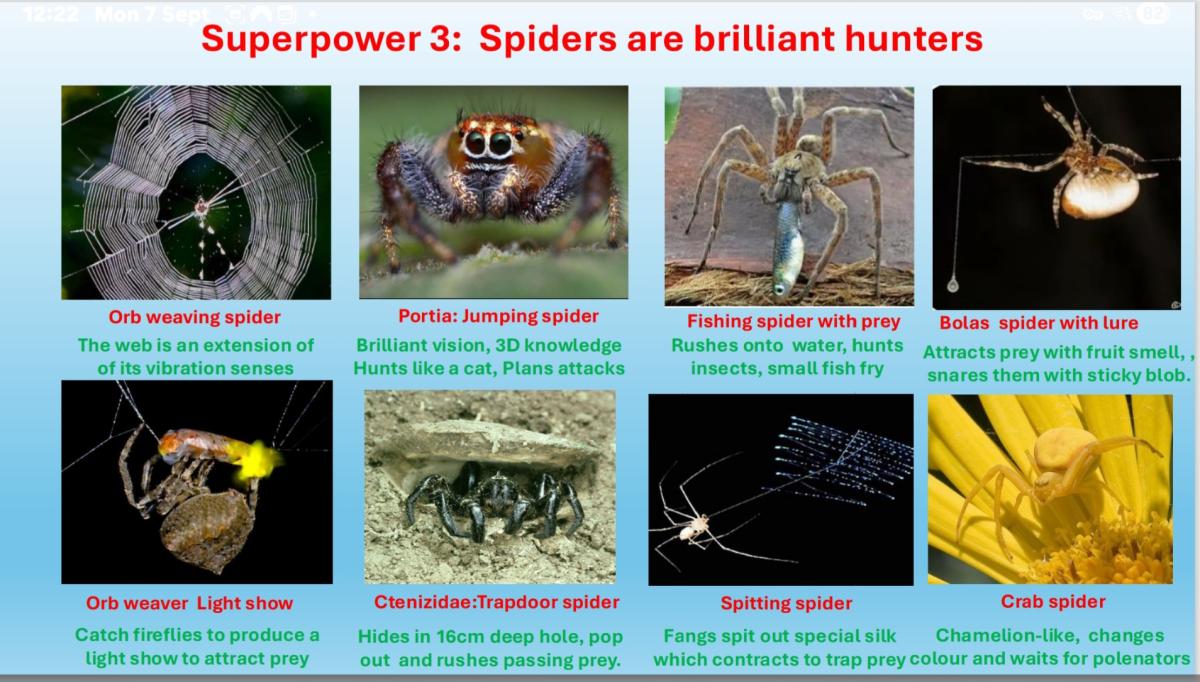
How do we react to them? On the ‘fear table’, spiders are the top, but it’s mainly a genetic issue as initially spiders were a real threat as serious venomous predators, which has had cultural reinforcements. The difference being that spiders have eight legs and 2 parts, cephalothorax and abdomen whereas the insects have 6 legs and 3 parts: head, thorax and abdomen. Humans are actually nearer to sharks than spiders are to insects. Both have ‘superpowers’: Spiders have silk (stronger than steel) and venom. They are also brilliant hunters (vibration specialists); Insects have compound eyes, and antennae (specialised chemical detectors). Both have outer casings of chitin (as important to insects and spiders as steel and plastic are to humans). Insects also have defensive secretions, sociability, and colour either from pigments or diffraction. Whatever, we can’t live without them: they are pollinators, great recyclers, they have uses in medicines (maggots and spider silk).
Bill asked “What is the most dangerous animal on the planet?” It is the anopheles’ mosquito, with about 600 000 deaths per year attributed to them. However, the housefly can carry cholera and typhoid, the deer tic causes lyme disease. An entomologist called Justin Schmidt developed a ‘pain index for stings and bites, covering European Honey bees, Hornets but extended (outside the UK) to and Bullet ants and Warrior wasps.
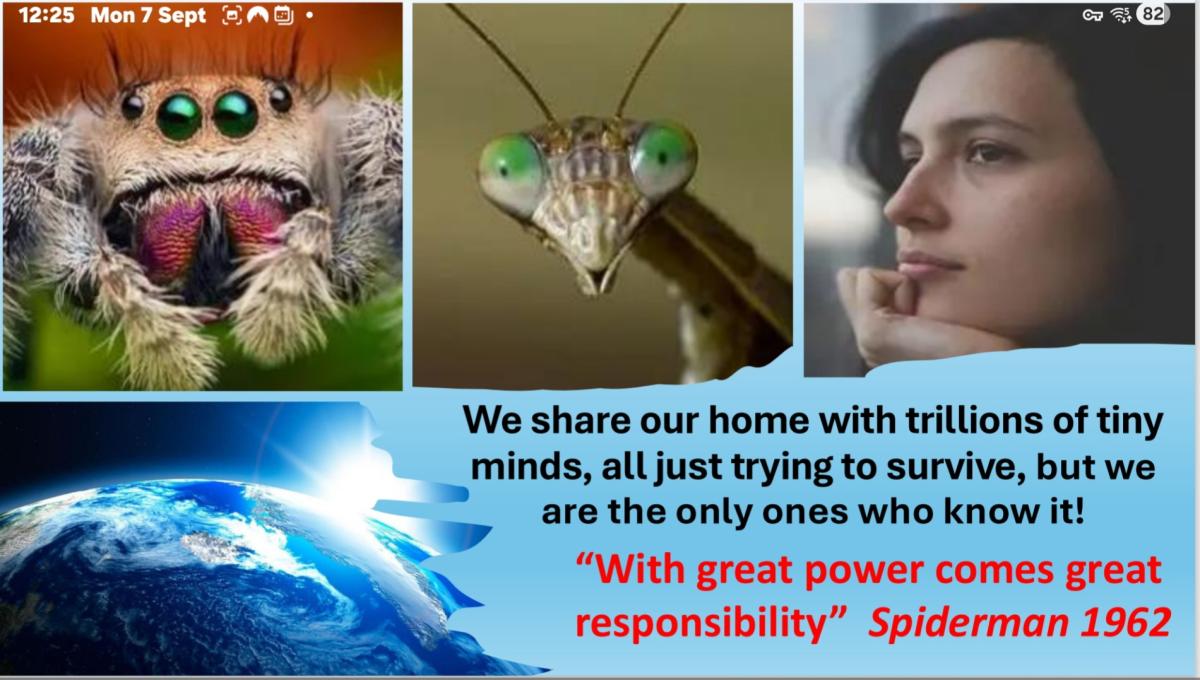
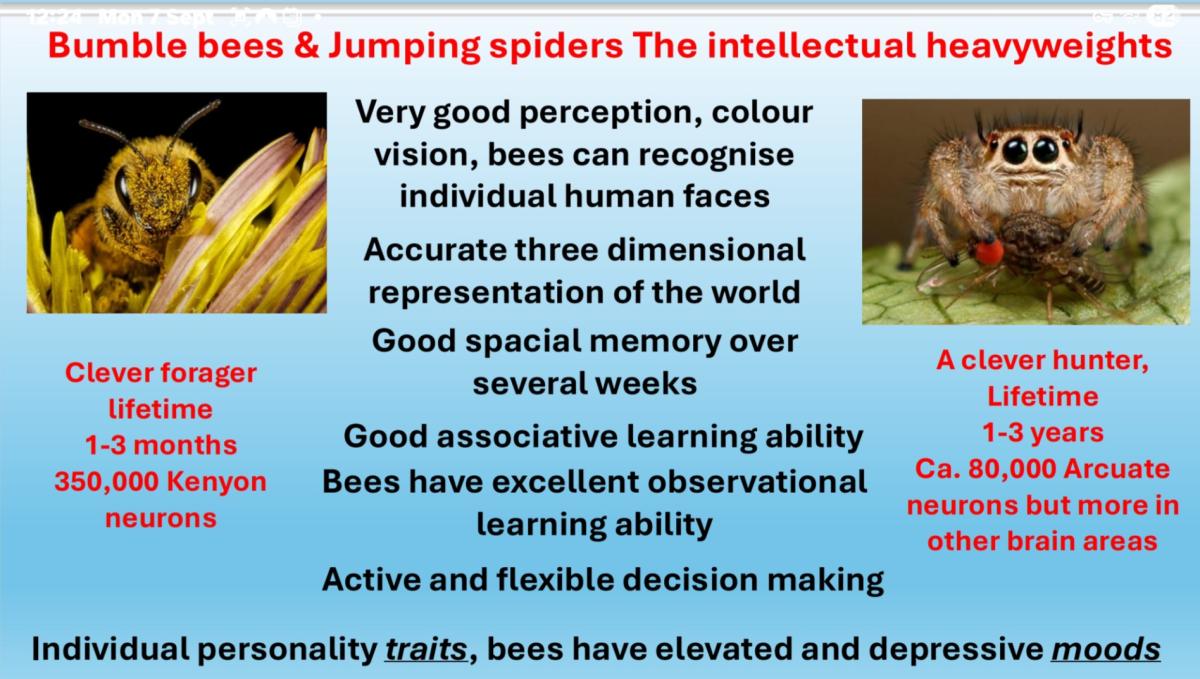
Both insects and spiders show intelligence, but do they have a mind? Bill showed evidence for minds that contained three-dimensional models of the world and also evidence of reward systems and motivations not dissimilar to our own. They show behaviour which if it were a mammal we would call emotional. The intellectual giants of each life form are the bumble bee and the jumping spider. Both show a complex modelling of the world, memory, learning and detailed planning
Alan F did the Vote of Thanks saying that this was our third presentation from Bill, all totally different topics, delivered in an interesting and professional manner and what an amazing subject this evening, expanding our knowledge and giving us all more respect for our long distant cousins. He asked the members to join him in a warm round of applause. AR
'What We Do' Main Pages:

We have now successfully run this event for 10 years. Full reports of each year are available under this main page
morePresidents David's vision for his year and our weekly speaker repoert
more
It's here that you can read what we've been up to in the last few months. For more information on our work in the local community, with our young people and internationally please access "what we do" section of this web site.
more
This is a monthly meeting open to visitors from Bingham, Radcliffe, Cotgrave and all villages in surrounding area.
moreThis committee are involved in planning now we can raise funds for our chosen charities
more
If you like what we do as an organisation and are interested in volunteering with us, keeping up to date with our plans and future events then why not consider signing up as a friend of our Rotary Club
more
Our International Committee is involved with Polio Plus - a Rotary initiative to eradicate Polio, World-wide; Sand dams; Aqua Boxes; Shelter Boxes; Collecting used spectacles, and many other projects
moreHere you can read about the many meetings we've had during our formation as a Rotary Club. The early years are a little short on detail...
more