Sand Dams
We are involved with several other UK clubs and international partners in the funding of Sand Dams in rural Kenya.
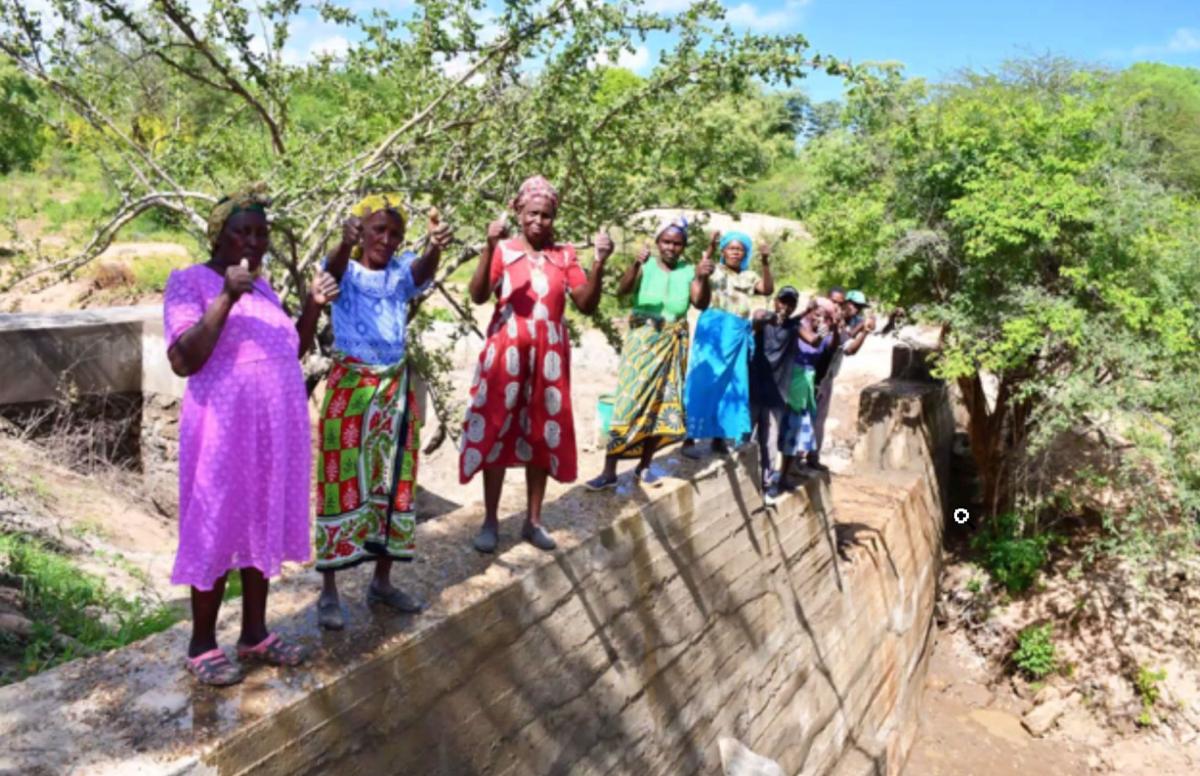
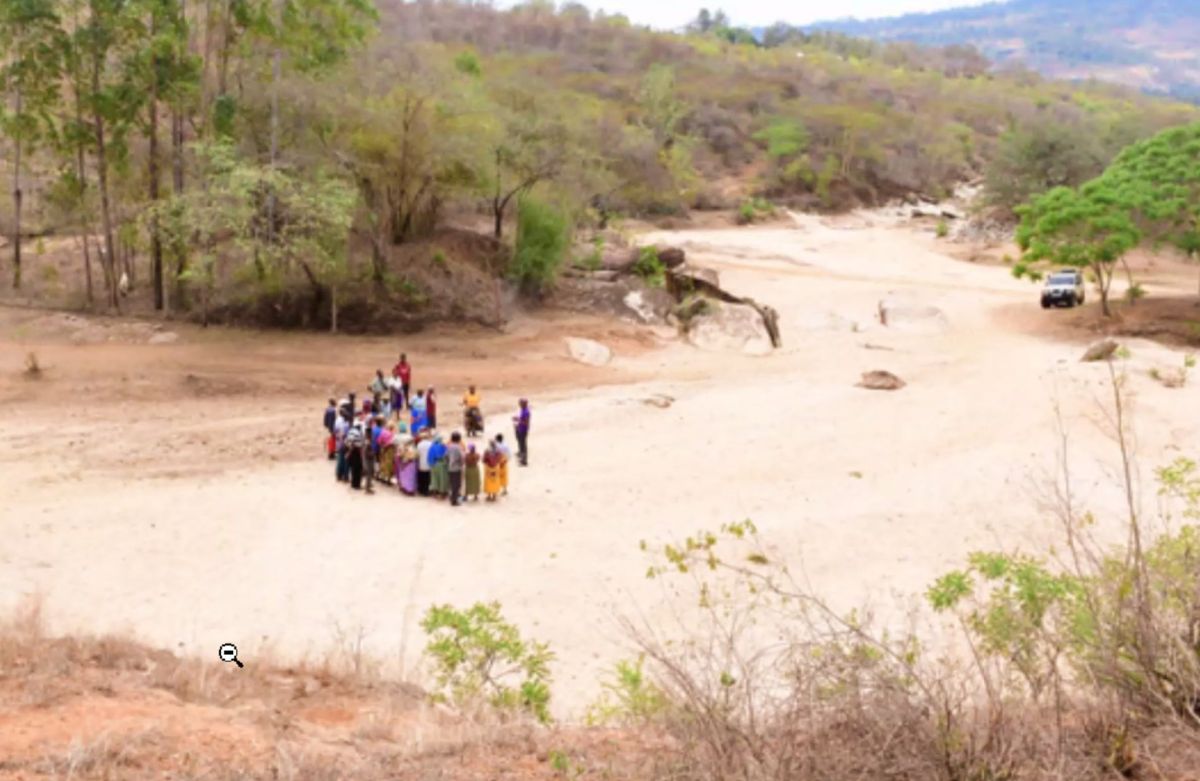
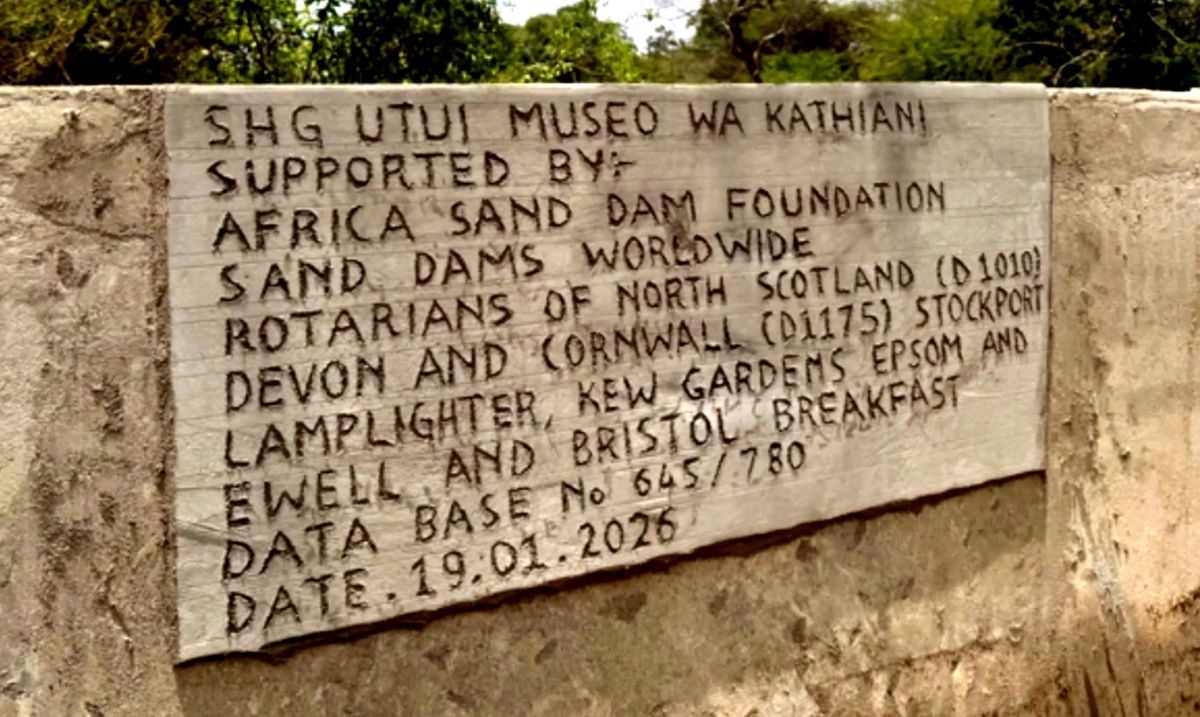
The first project in Kathiani Village Kenya is now complete , two photos show the dam with a close up of our clubs name on the plaque. This dam has a storage capacity of 11,100 cubic metres and serves over 3000 people.
The second and larger dam of 34,400 cubic metres in Kianagori, Kosomba is still in the planning stage and he photo shows a meeting at the site of the dam.
How do they Work ?
A sand dam is a simple yet ingenious low-tech solution for water conservation in arid and semi-arid regions. Essentially, it is a reinforced concrete wall built across a seasonal riverbed to capture water and sand.
1. The Construction
During the dry season, a trench is dug into the riverbed down to the bedrock. A concrete wall (the dam) is then built across the channel. This wall is typically low enough to allow heavy floodwaters to pass over the top while obstructing the flow at the base.
2. The Accumulation Phase
When the seasonal rains arrive, they carry large amounts of silt and sand downstream. The dam wall slows the water down, causing the heavy sand to settle behind the wall while the lighter silt and excess water wash over the top. Over one to three rainy seasons, the area behind the dam fills completely with sand.
3. Subsurface Storage
Once the "reservoir" is full of sand, it acts as a giant sponge. Up to 40% of the volume of that sand is actually water held in the pores between the grains. This creates a subsurface aquifer that is protected from the primary enemy of open-water dams: evaporation.
4. Water Extraction
Because the water is stored underground, it stays cool and clean, as the sand acts as a natural filter against parasites and bacteria. People can access this water in two ways:
Shallow Wells: Digging into the sand or using a pre-installed well pipe.
Infiltration Pipes: Pipes built into the dam wall that lead to a tap stand downstream.
Click the link below for more information.
