Emergency! Air Ambulance 2026
20 Rotary Club of Billericay members, partners and friends visited the Essex and Herts Air Ambulance Emergency Medical Service at their North Weald airfield base on May 14, and we know a lot more about this emergency service now.
Emergency! Air Ambulance 2026
Ambulances!
Volunteer
Explanations
Rapid Response
Vehicle
Donation
Uniform
Trying on
The Helmet
The Lift
To The Rescue
Easy to find, but a long trek round the airport (No yellow brick road, just follow the little red line) at 20 mph with hazard flashers on, before reaching the visitor centre where we assembled for our visit and where we were greeted by three volunteers - Natasha, Ian & Marian.
A Little History
One of 21 air ambulance organisations in the country, Essex Air Ambulance was founded in 1997. It began flying seven days a week (during daylight hours) in 1999, and merged with the Herts Air Ambulance service in 2007. Its base moved from Boreham to Earls Colne in 2011, and in 2016, co-pilots were introduced to the crew, a major innovation which allowed the paramedic to be in the back of the helicopter with the doctor and patient, enhancing patient care. Following the success of the visitor centre at Earls Colne, a similar centre opened at North Weald airbase.
A Service for the Community
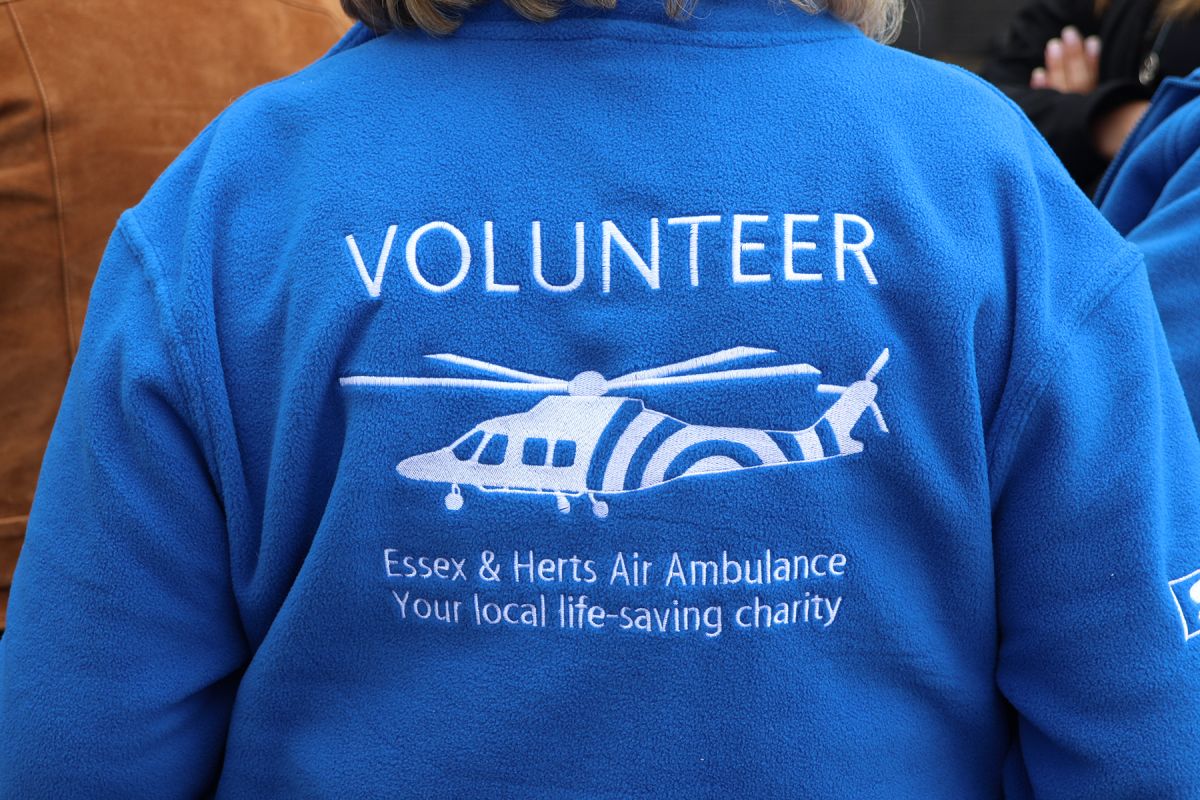
On arrival we were greeted by the three volunteers and offered drinks and biscuits before the presentation began. “The service now uses approximately 430 volunteers, 100 of which are in the charity shops” they said. “We do all kinds of work, from speaking, taking collecting buckets around, hosting a stall at community events and much more. I am one of those who talk to people like you to try to give you an idea of what it involves and how it all happens.”
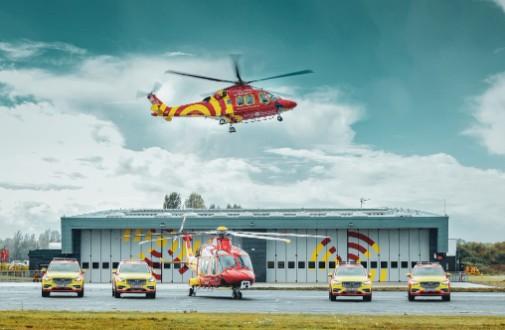
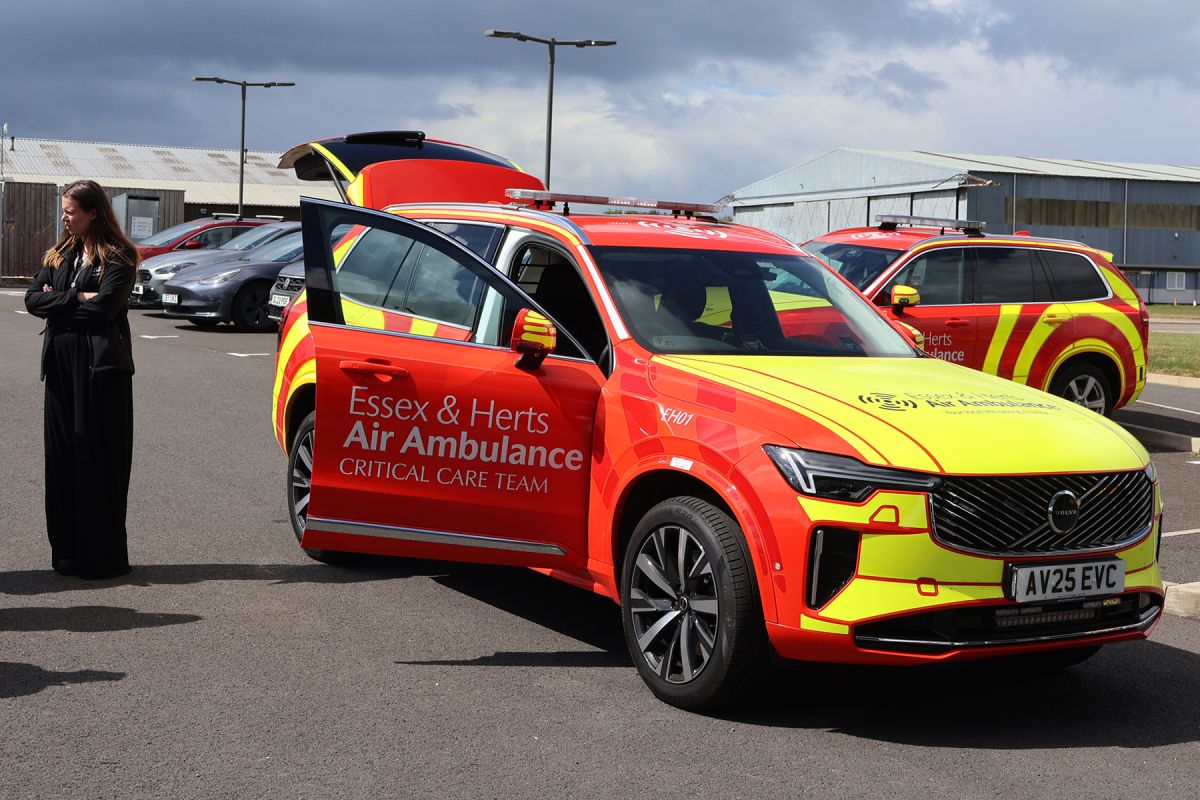
The service has two Augustus Westland 169 helicopters, one at each base, and two active Rapid Response Vehicles (RRVs) at each base, with the same kit as the helicopters for nighttime and when the helicopters are unavailable.
Each helicopter has a pilot and co-pilot, a pre-hospital care doctor, and a critical care paramedic. The aim is to take “Accident and Emergency” high level care and expertise to the patient anywhere in Hertfordshire and Essex. Flying at up to 170 mph it can reach any part of Essex in under 20 minutes., and any part of Hertfordshire in under 15 minutes I.E. the team bring the hospital to the patient, enabling life-saving procedures to start at the earliest opportunity, giving patients the best chance when the worst happens.
What a Service
The doctor and paramedic are all trained to meet the needs of an emergency - even to the extent of performing open heart surgery, or amputations, etc. at the scene! On board is all the medical equipment of an A & E department, and they can monitor immediately whether the patient is on drugs, warfarin or has a blood disorder etc. Unlike land based NHS ambulances, since 2019 they have carried blood on-board, delivered to them by Essex Blood Runners from Princess Alexandra hospital in Harlow. If the blood isn’t used it is returned to the hospital, if it is used, the Air Ambulance trust is charged £380 per unit!
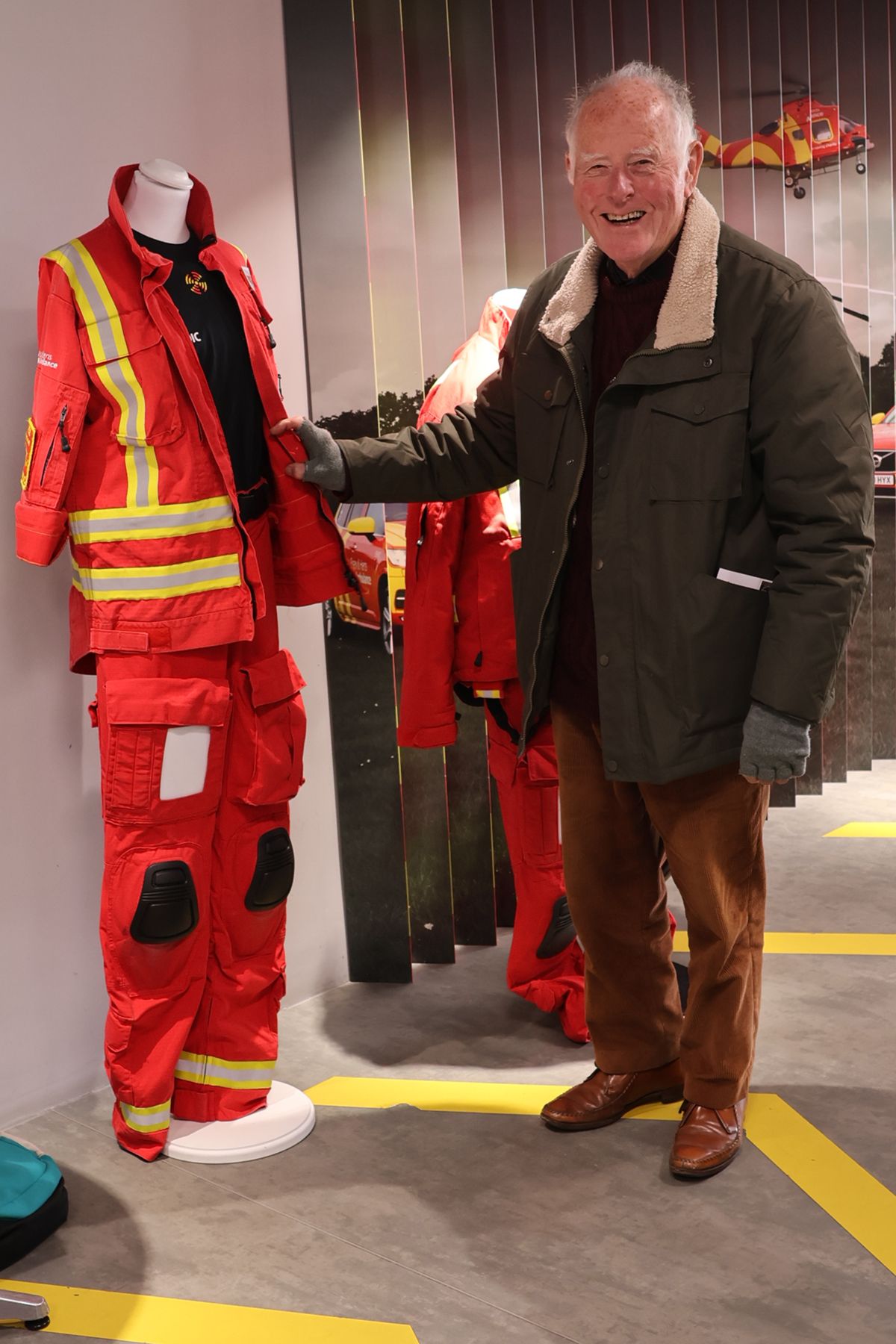
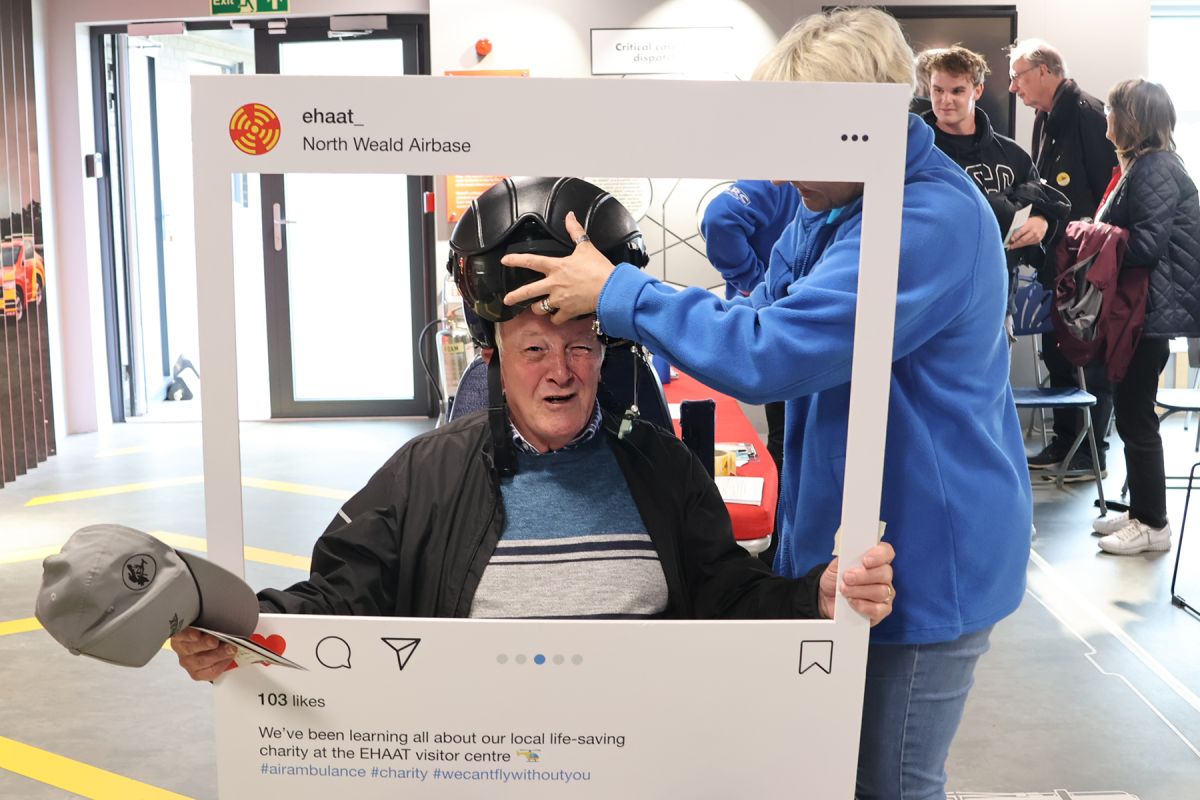
These critical care teams are available 24 hours a day, 365 days a year and also work closely with air ambulances in London, Cambridge, Kent, Surrey, Sussex, East Anglia and Thames Valley in cases of major or complex incidents, such as major road traffic accidents. Medics wear red uniforms, and pilots black. Each uniform costs £2,000, and each helmet £2,500
Most call-outs are medical emergencies and most of them are cardiac arrests, followed by Road Traffic accidents, falls, and traumas such as stabbings etc..
How Does It Work?
EHAAT is activated by the East of England Ambulance Service NHS Trust (EEAST), which covers Essex, Hertfordshire, Bedfordshire, Suffolk, Cambridgeshire and Norfolk. 999 calls are assessed by a critical care paramedic and a dedicated dispatcher on the critical care desk based in its emergency operation centre in Chelmsford and identify patients who would benefit from an advanced level of care.
In addition, they can be activated immediately, by the critical care paramedic on duty at the EEAST critical care desk, to trauma incidents such as falls from height, serious road traffic collisions or specific medical emergencies, or when the advanced level of care they provide would benefit the patient. Finally, a Land Ambulance crew can request EHAAT critical care assistance if a patient would benefit from it.
On occasion, neighbouring ambulance services may request EHAAT attendance for mutual support to assist at large-scale incidents or due to the unavailability of the local critical care team.
Terrific Teams
The highly trained pre-hospital care doctors are very skilled practitioners with a wealth of experience in emergency medicine, capable of delivering advanced hospital-level emergency care to respond to major trauma and critically ill patients.
The critical care paramedics are on 5-year secondment from the NHS and undergo enhanced training so they can deliver advanced medical care at the scene of an incident. With vast knowledge and expertise in pre-hospital care, each critical care paramedic can provide life-saving care, stabilising patients and preparing them for onward transport to a hospital. The teams are so effective that only 13-14% of patients need to go on to Hospital! If it is necessary, they fly patients to Basildon (Cardio-Thoracic Centre), Queen’s Romford (Neuro-centre), Royal London (Major Trauma), Broomfield (Burns) and other general emergency hospitals such as Ipswich.
Unfortunately, we were told we couldn’t see the helicopter as it was “in pieces in the hangar being repaired”, so we had to make do with an RRV. Disappointing! It would have been good if we had been told this before we arrived.
Thanks for All the Good Work
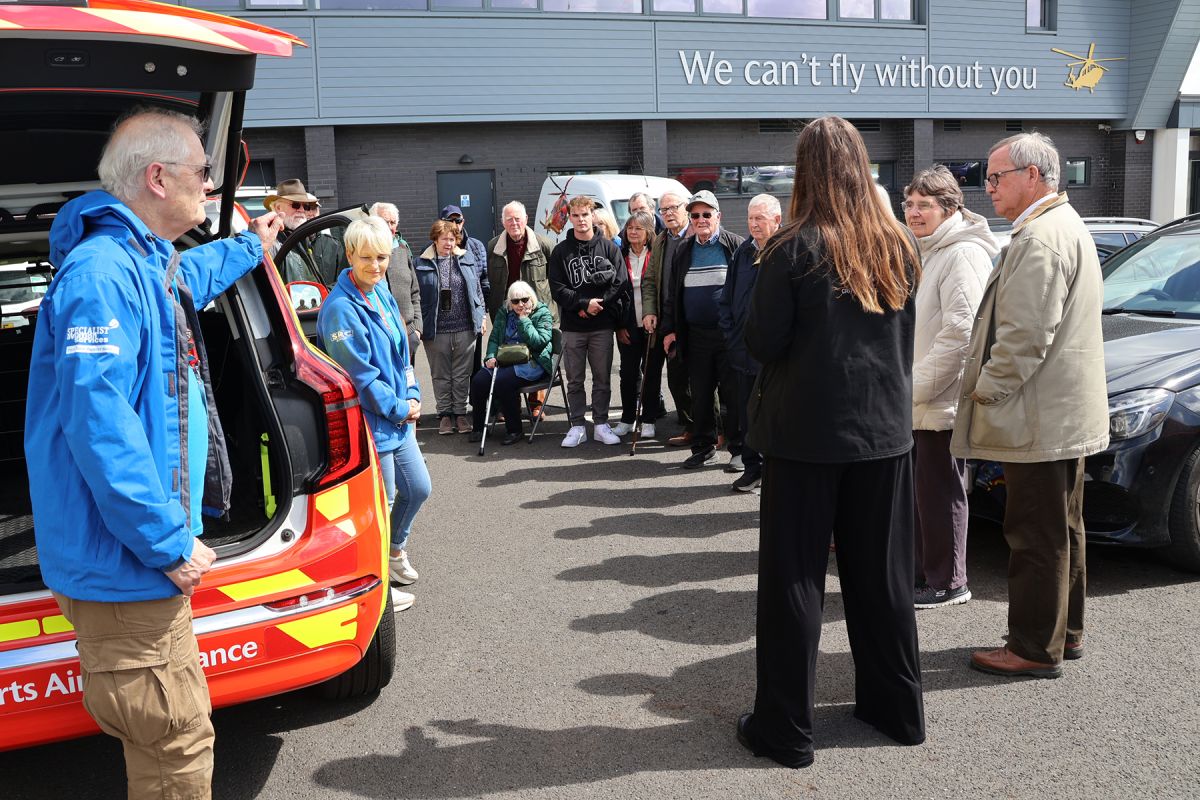
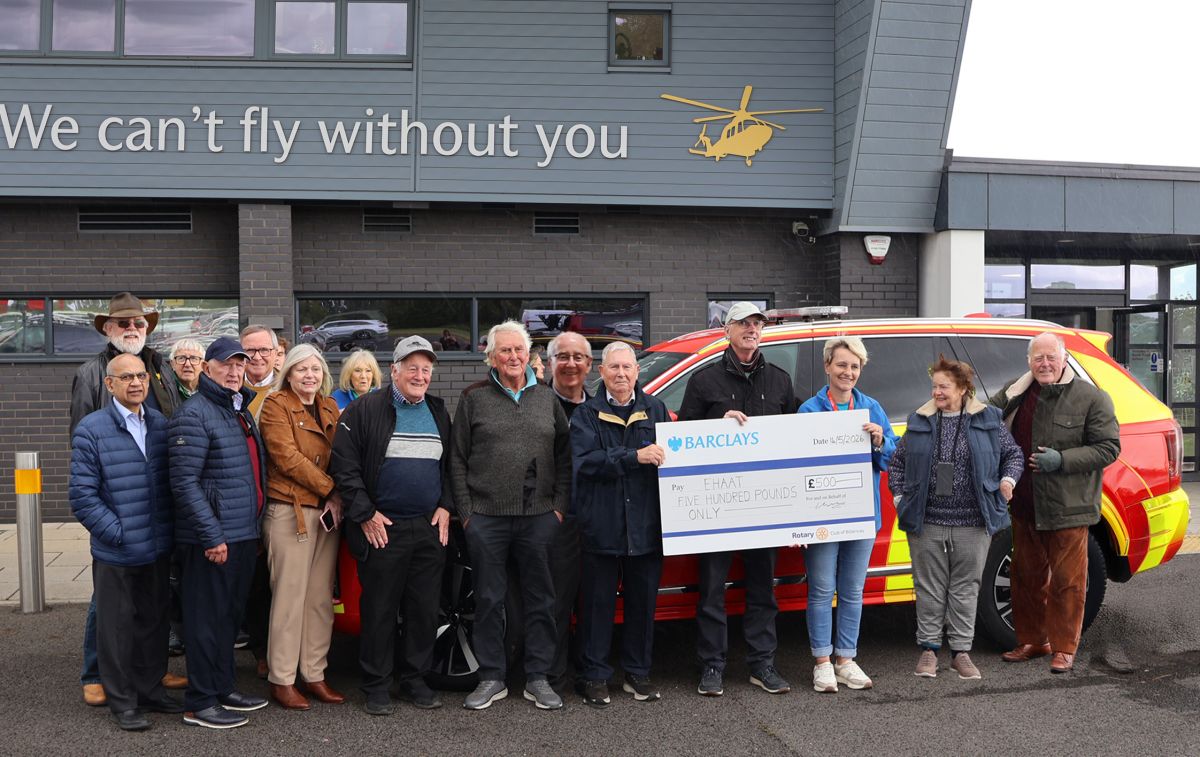
So, outside we trooped to see an RRV – interestingly a white Volvo “wrapped” in the red and yellow livery of the Air Ambulance service with “blue lights flashing”. A full explanation of how they worked, and then time for a group photograph. and handover of our donation of £500 before the rain started.
We were then shown two videos, one about a motorcycle accident and the other – Alison’s story - stressing the value of CPR when given by a bystander at the point of an initial heart attack, in Alison’s case by her daughter.
back to page above this...
Community Service
back Our club contributes to the community by holding or supporting projects which encourage our young people to stretch their capabilities, and supporting projects which enrich the life of our town.