Centre for Advanced Diagnostic Development and Application (CADDA)
Sat, Jan 31st 2026 at 10:15 am- Tue, Mar 31st 2026 - 12:15 pm
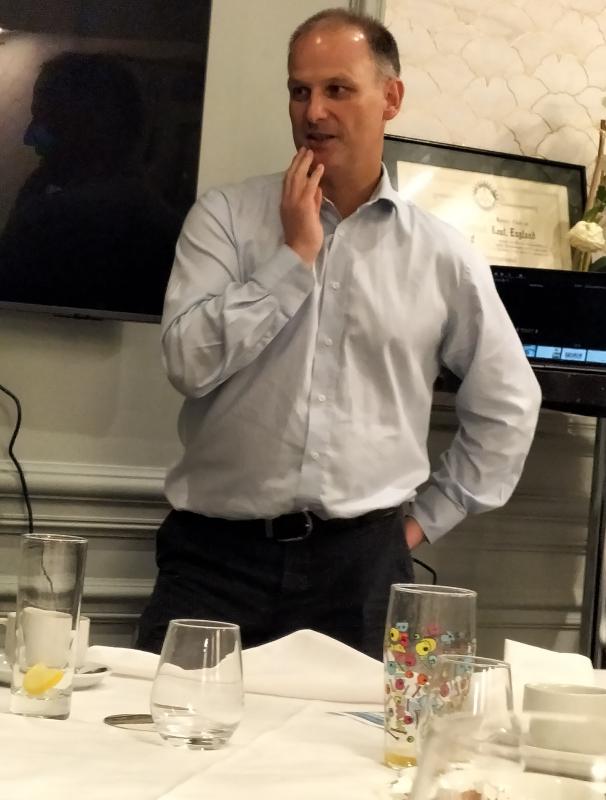
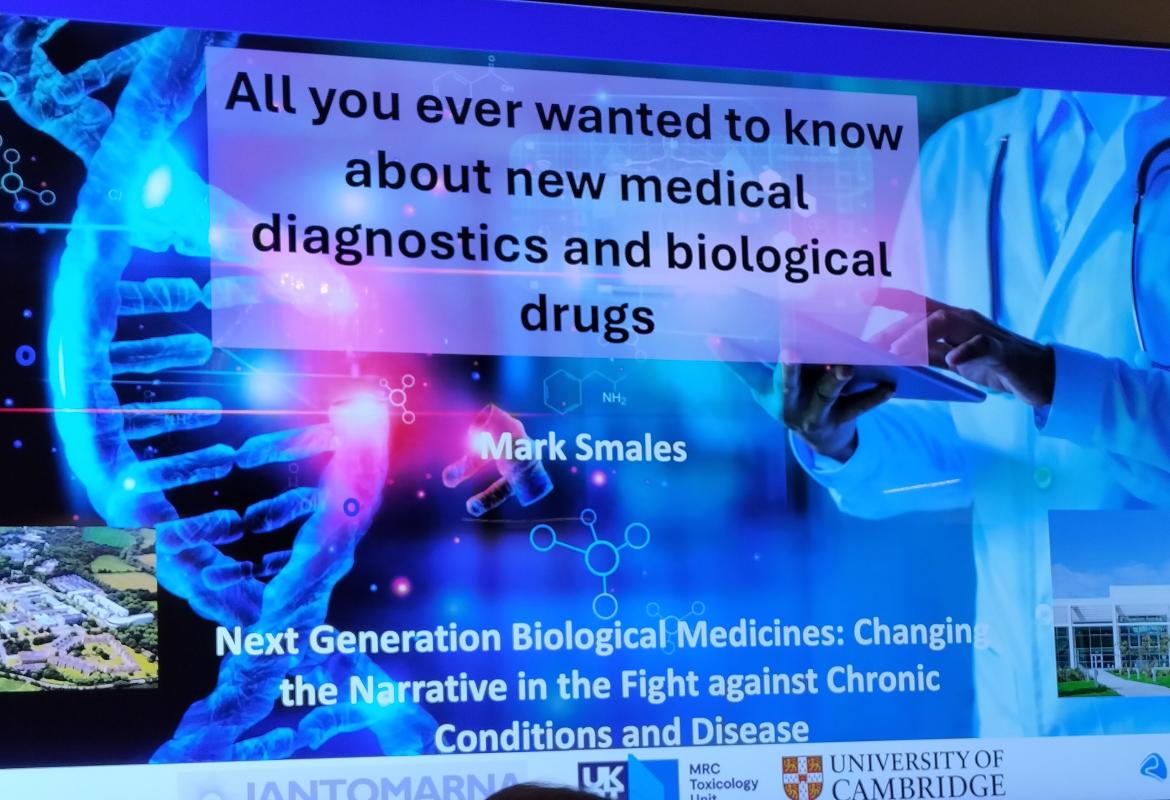
Professor Mark Smales from the University of Kent talked to members about the new medical diagnostics and biological drugs. These Next Generation medicines are changing the narrative in the fight against chronic conditions and diseases.
Centre for Advanced Diagnostic Development and Application (CADDA)
At a recent meeting club members were given an informative, interesting and well delivered presentation on the work of CADDA by Professor Mark Smales. He works between sites at the University of Kent and University College Dublin. The University of Kent’s Community Diagnostic Centre also works with Manchester University and University College London to help progress new diagnostics out into the community.
Mark started by mentioning prehistoric man who lived an active life in a clean and unspoilt environment, yet life expectancy was only 30 years. Advances in medicine have given humans longer lives, especially in more recent times, and the prospect of ageing healthily.
Biological drugs, which are protein based, have been developed by harnessing our immune system (in the way that vaccines work) to produce antibodies. A good example is insulin for diabetes. We all produce insulin, but when this is deficient a replacement is needed. At first this came from pigs but some people reacted to this: non-harmful insulin is now be made quite easily and on a large scale from e-coli or baker’s yeast. The global price of insulin varies: $99 in USA, $58 in the UK and $10 in Ireland. CADDA is working on how to make insulin less costly for people in more deprived areas of the world and for poorer communities in more wealthy countries such as the USA.
Antibodies are made by harnessing our own fighting force against many diseases, including cancer. Our immune system targets human cells, such as kidney cells, and these are reprogrammed to make antibodies in the nucleus of cells that contain DNA.
Biological medicines are now very important. As a result of the Covid pandemic there was rapid development of covid vaccines, at a great cost; Pfizer produced one of the top selling vaccines. There are effective biological drugs for rheumatoid arthritis and age-related macular degeneration, but these are very expensive for the NHS. CADDA is aiming to reduce the cost of biological drugs so that they may be made more widely available. With self-testing becoming the norm for the covid virus, this technique will be useful for future diagnostics.
The development of new drugs, including clinical trials, takes many years before they are approved by NICE (National Institute for Health and Care Excellence). They are given brand names by companies as their original names would be difficult. For example, Herceptin (original name Trastuzumab), which is effective for around a quarter of breast cancer cases. It has been available since 1988 and is on the World Health Organisation’s list of essential medicines. The cost of a course of treatments is 100,000 euros, and with 11,000 cases the cost implication for the NHS can be seen.
This is a problem with many new drugs; they may be effective but at a great cost. This underlies the fact that it is large companies who develop and market drugs and want a return on their investment.
Deciding which drugs should be available is a difficult balancing act. NICE will look at quality adjusted life years a person will have if they are given a new drug. Then there is the problem of patents. Some large companies will extent a patent for years because if it came off patent the drug could be made by other organisations.
Mark spoke about ‘chilling cells’. At lower temperatures more cells can be made and will be protected from degeneration. The idea of a nebuliser to protect from degeneration is a possibility.
Another development has been Gene Therapy, which changes lives. It may work on cancers or inherited diseases. For example, the mutation of as gene in Haemoglobin has been transformational for people with Haemophilia B, where cells are made to replace the faulty gene.
Diagnostics is now used in 70% of clinical decision making. The UK is now developing NHS Diagnostic Centres: we have one in Thanet and there are 140 or more nationally.
In the UK it is SMEs (small and medium business enterprises) which are the powerhouse behind diagnostic development. That is about 80% of diagnostic companies. CADDA gives them support and knowledge as well as helping with access to finance. CADDA deals with animal health and food security as well as human health. There is a push towards a plant-based diet and a decline in eating red meat. We will need to monitor The effects of these changes will need to be monitored. SMEs, clinicians and academics from CADDA are working on the use of self-testing approaches, such as for degeneration.
Professor Martin Warren of Kent University (who lives at Barham) is an expert in vitamin B12 and its importance to the diet. A deficiency of this vitamin can have mild or serious symptoms, from tiredness, headaches and mouth ulcers to anaemia, cognitive impairment, heart problems and depression. It is more common in older people who will need a dose of the vitamin on a temporary or permanent basis. About one third of patients are diagnosed with this deficiency. There were three factories producing the B12 drug, one in France, one in China and one in the USA. Now the only operating factory is in China, so there may be a problem with supply.
The importance of biological medicine needs to be emphasised and understood. We need better ways of manufacturing drugs for health and wellbeing, and diagnosis will play an increasing role in healthcare. One problem highlighted by Mark was the need to lower the cost of drugs produced by the big companies and make them more easily available to those who need them. A related problem is the inconsistency of supply chains as world trade becomes less reliable and production of drugs has fallen. We have recently had a shortage of aspirin as we do not manufacture as much of this as we used to.
Thanks to Mark for his authoritative talk on an important subject. He has invited the club to visit the University of Kent to meet CADDA staff and see what goes on, which will be very interesting.