Samphire Hoe: Visit and Presentation
Tue, Aug 18th 2026 at 10:02 am- Sat, Oct 31st 2026 - 12:02 pm
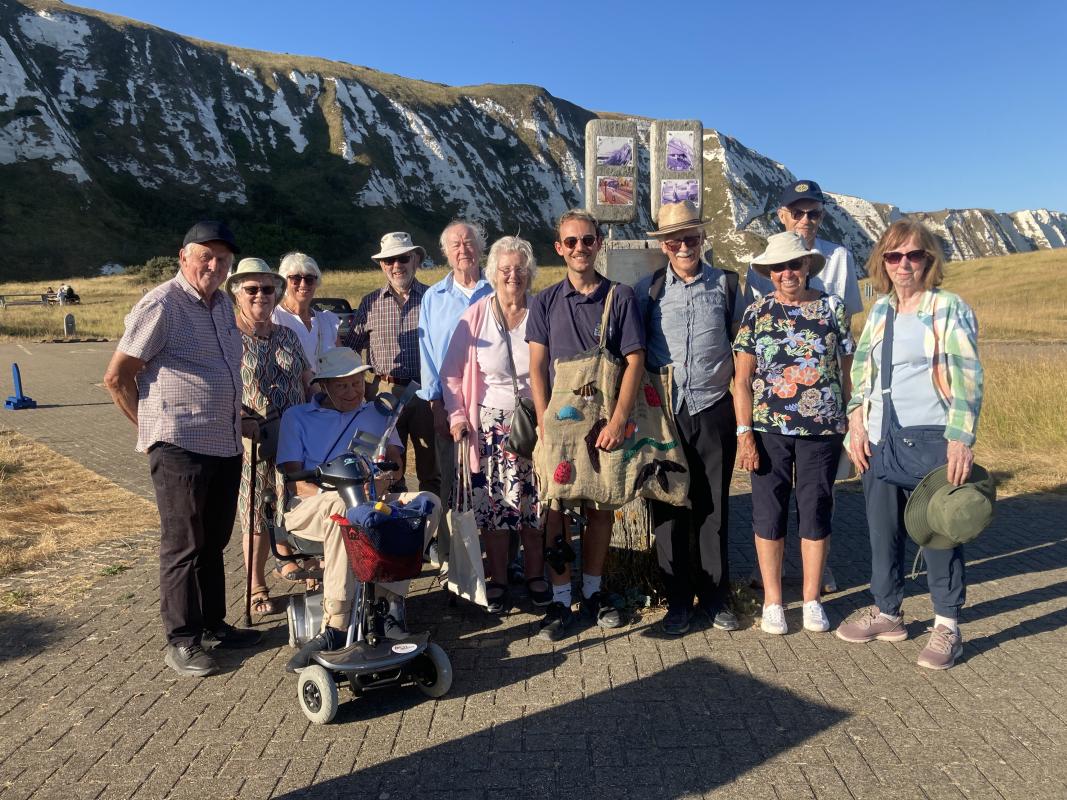
On 12th August club members visited Samphire Hoe for a guided tour with Ranger Lewis Smith. This was followed by an evening meal at the Marina Hotel and a lively presentation by Lewis whose knowledge and enthusiasm for his job was evident.
Samphire Hoe: Visit and Talk on 12th August 2026
Club members gathered at Samphire Hoe at 4.30pm for a guided tour by White Cliffs Ranger Lewis Smith. This was followed by dinner at the Marina Hotel before Lewis gave us his presentation. He studied for a degree in Wildlife Conservation at the University of Kent and had several other jobs before securing his current position as a Ranger two years ago. It is a job which he really loves and his knowledge of and enthusiasm for wildlife was evident in both his guided tour and presentation.
Samphire Hoe Country Park was created at the foot of Shakespeare Cliff between Folkestone and Dover using chalk marl dug to create the Channel Tunnel. Construction of the nature reserve and country park began in1987. Its name was chosen as rock samphire is a coastal plant growing on the cliffs and was much sought after for culinary purposes in Victorian times. The plant was seeded along the cliffs when the Hoe, meaning hill or promontory extending into the sea, was created.
Samphire Hoe is a Eurocentric site but the history of the area immediately at the foot of the cliffs began long before the Channel Tunnel was built. So how did this area of sea become land? Before Samphire Hoe the Folkestone to Dover railway was built at the foot of the cliffs. It opened in 1843; the land on which to build the railway was created by blasting the cliffs with gunpowder. This slowed erosion, allowing the cliffs to green over.
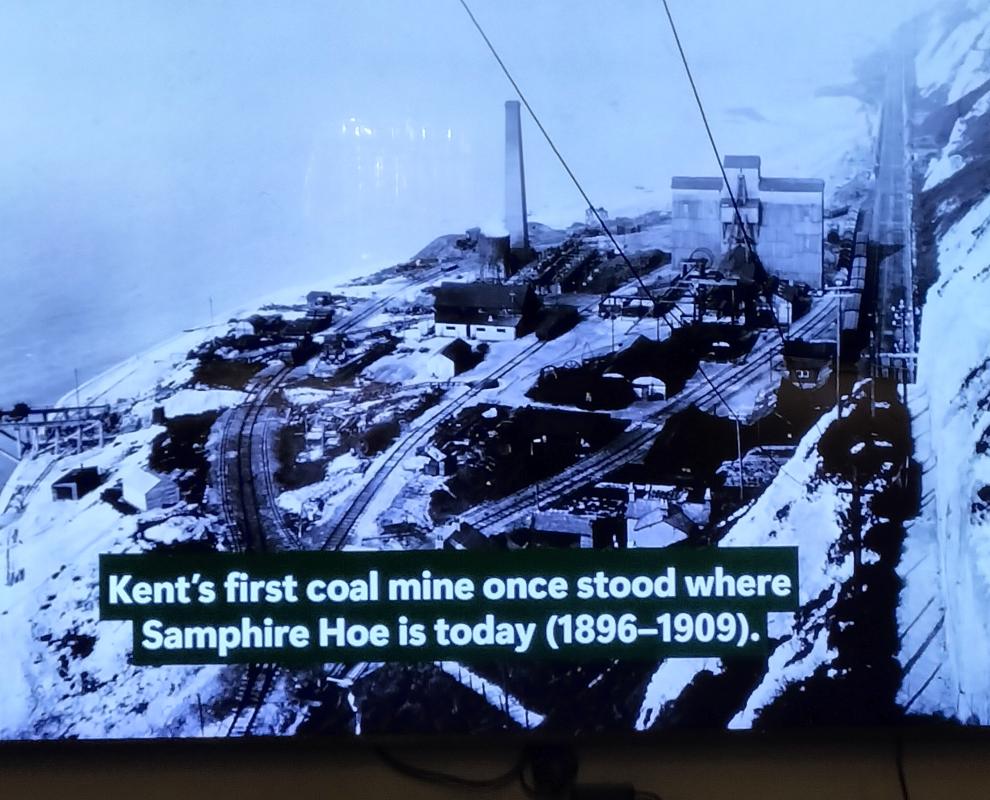
Kent’s first coalmine once stood near the Samphire Hoe cliffs. There were also attempts to build a channel tunnel from here. Early ideas ranged from seabed tubes to ice tunnels. The first serious attempt began in 1881 using a compressed air boring machine. In 1970 another attempt began, cutting the tunnel to reach Samphire Hoe that we use today. These earlier attempts failed due to lack of money and political will.
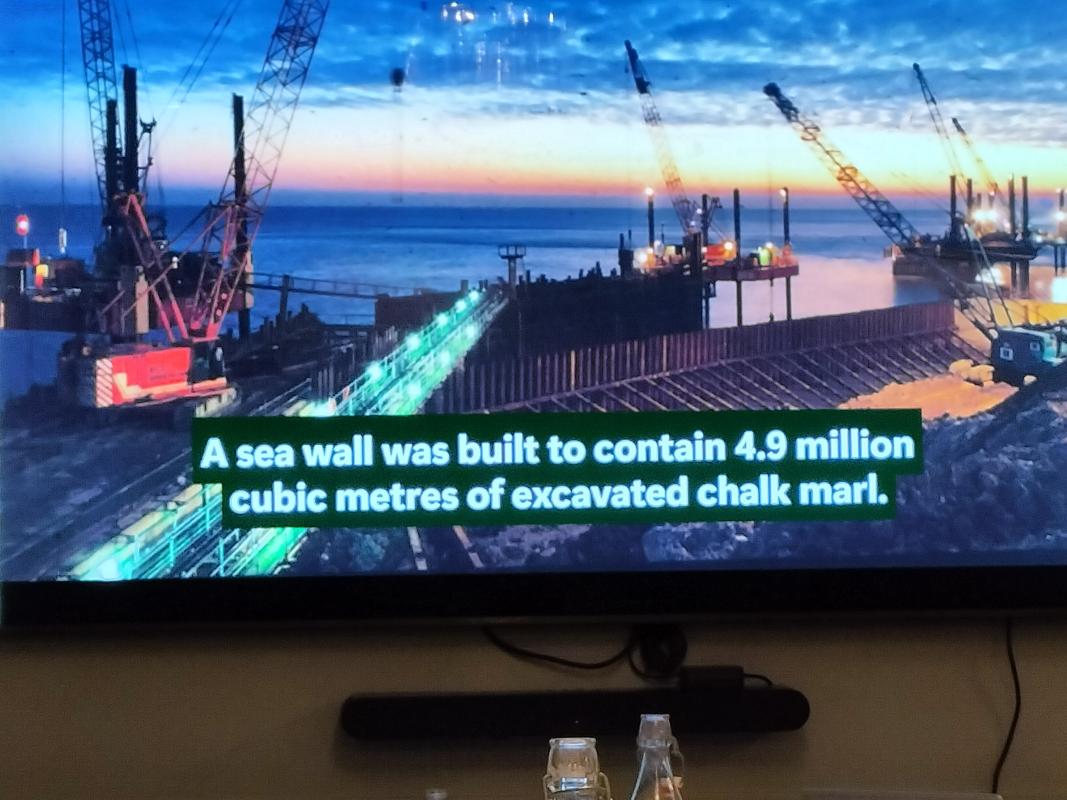
In 1987 a 12 metre wide adit was dug for access to the Channel Tunnel works. The following year construction of the Channel Tunnel began and a sea wall built to contain the 4.9 cubic million metres of excavated chalk marl. The site was landscaped and renamed Samphire Hoe. It opened to the public in 1997and has become a haven for wildlife and a centre for outdoor learning and events.
Since 1989 White Cliffs Countryside Partnership has managed Samphire Hoe on behalf of Eurotunnel as well as managing other wildlife sites in the Dover, Folkestone and Hythe areas. In 1996 the organisation was expanded to include Romney Marsh with the creation of Romney Marsh Countryside Partnership. While the Partnerships operate in different areas and under different names they work together as one organisation with a shared purpose and team. With help from partners, volunteers and local communities, the organisation now manages 19 nature reserves over nearly 1,000 hectares from Walmer Beach to Dungeness.
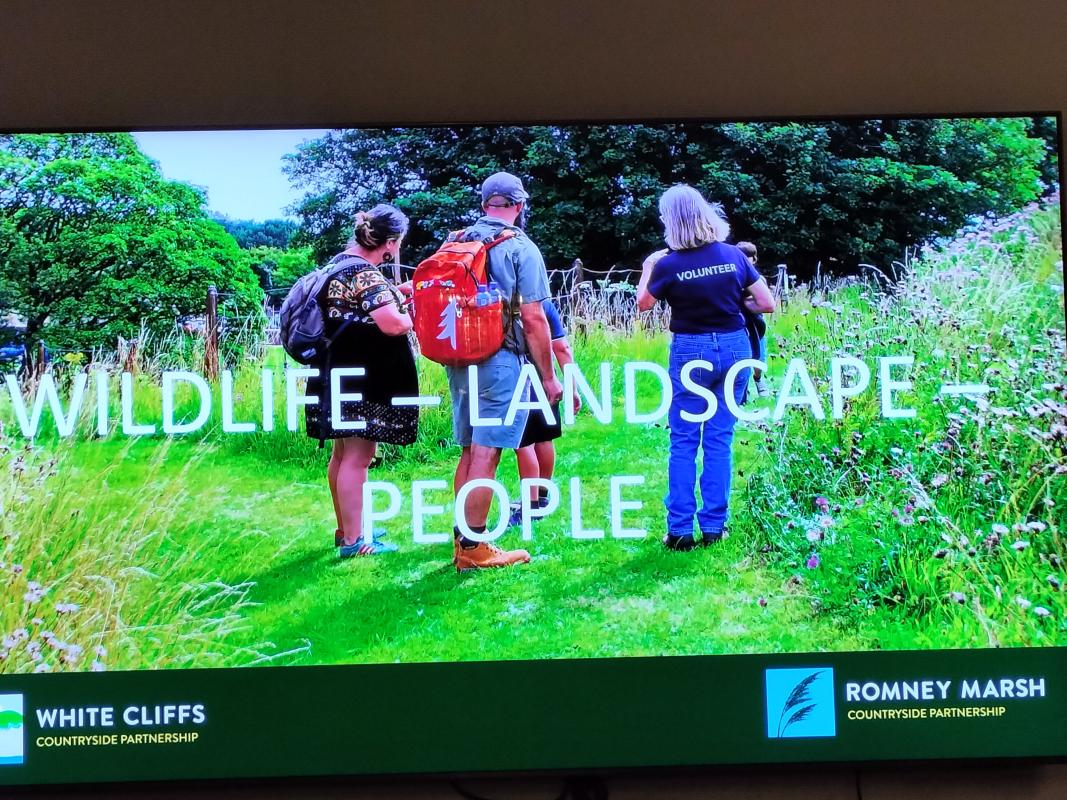
The organisation’s motto is ‘Wildlife - Landscape – People’ and its basic purpose is to protect and enhance the wild spaces of South East Kent by inspiring people to act for the local environment and for the future of the planet. It delivers across four Focus Areas: inspiring local communities, managing the Partnership, managing wild spaces and reducing our climate impact.
Having completed his training Lewis found that he enjoyed engaging with the public, sharing his knowledge and spreading awareness of this rare chalkland habitat. Inspiring local communities happens by making places accessible, working with other organisations, such as Natural England and the various landowners, welcoming local communities and groups, providing educational visits, outdoor activities and family events, and engaging with volunteers and businesses.
Working with schools to get children to experience nature outdoors through activites rather than at second hand is important. Family free events are also run, an example being the Sunday Funday at Fort Burgoyne earlier this summer. The aim is to enable children to know about and enjoy the open spaces we have. The experience of nature can help with improving mental health in what is becoming an increasingly scary world. Most people respect the reserve but issues of vandalism, litter and not keeping to paths arise at times.
Managing the Partnership involves training; those who complete the training have so far found a permanent post with the organisation. All sites have regular safety checks to ensure that everything is in order. It is a not-for-profit organisation with most funding coming from its partners, the landowners who pay for their land to be managed. Partners include Affinity Water, Aylesham Parish Council, Dover District Council, EDF Energy, Eurotunnel, Folkestone and Hythe District Council, Kent County Council, The Land Trust, Natural England, Network Rail and St Margaret’s Parish Council. It also receives funding from the Government, from the services it provides, such as educational activities and family events, together with donations from members of the public and some grant income.
The organisation is hosted by Dover District Council which is their accountable body and they report regularly to the Steering Committee, which is made up of their main funders.
Managing the wild spaces to protect and enhance wildlife and to involve local people is at the heart of what the Partnership does. Most of the world’s chalklands and streams are found in South East England and Northern France. This area is known as the Cross-Channel Geopark and is a collaboration between the Kent Downs National Landscape (UK) and the Parc naturel regional de Caps et Marais d’Opale (France). The Geopark is working to secure UNESCO Global Geopark status.
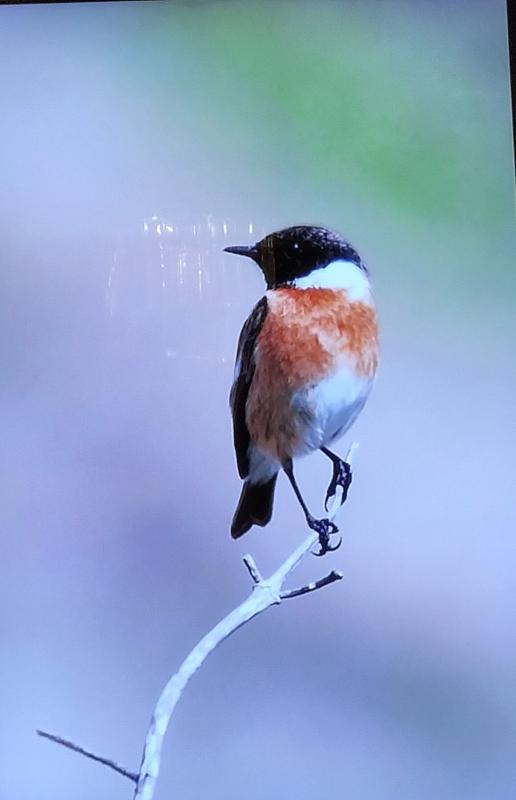
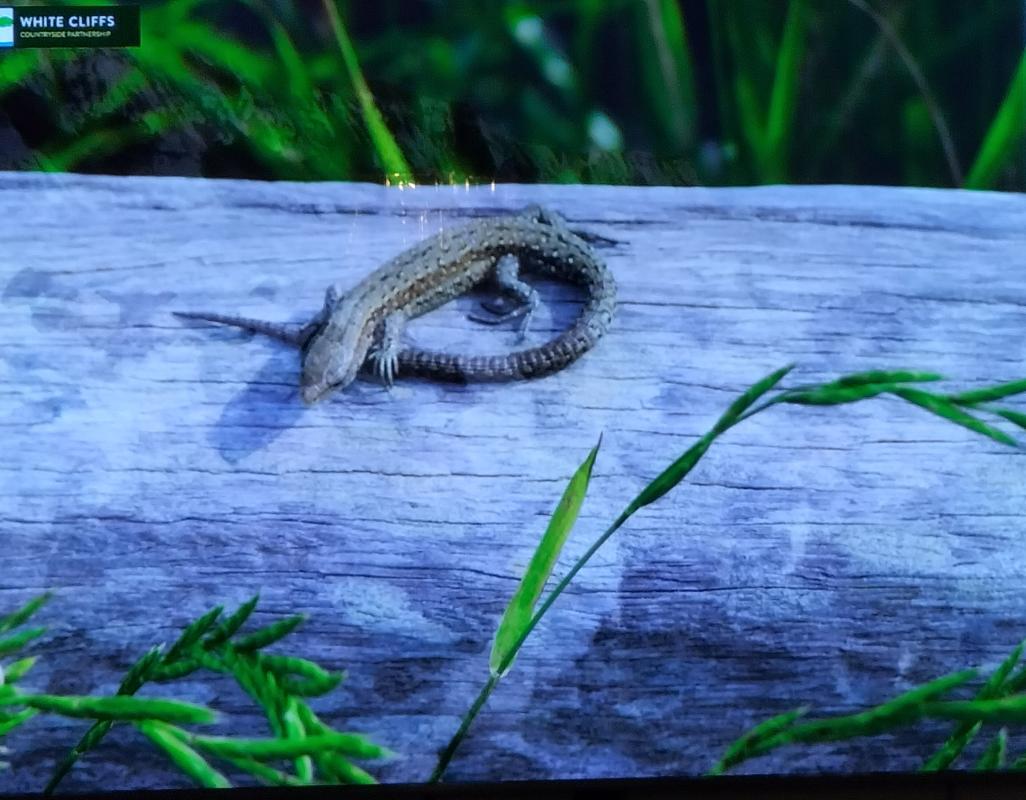
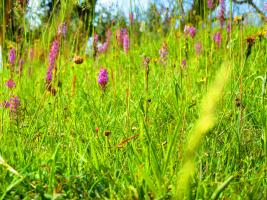
Grass chalklands are special as they have been managed by man since Neolithic times. Samphire Hoe, with its 212 hectares has added to this ideal habitat for wildlife. There are flowers such as various orchids, mammals such as the vole, reptiles such as adders and lizards, 18 species of butterfly including meadow brown, marbled white, gatekeeper, yellow brimstone and orange tip. Bird life abounds with starlings, stonechats, skylarks, meadow pipits, kestrels, peregrine falcons and ravens as well different seabirds. A good way to engage members of the public is to get them involved in wildlife surveys, of flowers/plants, butterflies or birds, for example, or in monitoring paths for public access.
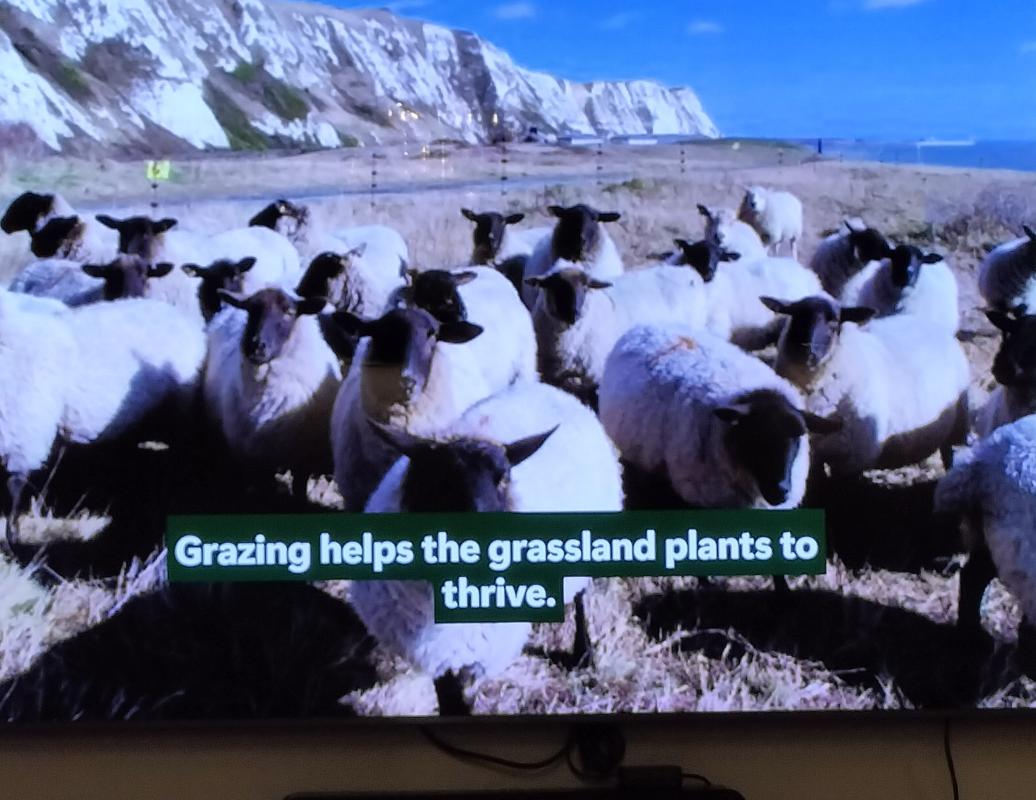
Samphire Hoe has a number of ponds that need attention at times, as well as a shoreline of beach and rockpools. Chalkland needs to be grazed as this promotes growth of flowers and plants. Cattle, sheep and goats are used for this. Invasive species such as bramble and sea buckthorn have to be controlled or they will soon take over the grassland. Rangers work with volunteers at Samphire Hoe to clear the growth of brambles with scythes and to dig up sea buckthorn which is harder to remove. Controlling vegetation which might be harmful is carries out at all the nature reserves.
One of the other open spaces, the South Foreland Valley at St Margaret’s Bay, is a good example of local management. The Parish Council provides equipment for volunteers who manage this area of chalk grassland led by Ranger Jason. They meet once or twice a month to maintain this valuable habitat where examples of wildlife include orchids, autumn gentian, wild marjoram, chalkhill blue butterflies and many bird species. Volunteers cut back vegetation when necessary and now there are some Dexter cattle grazing the area.
Most of the world’s chalk streams are found in South East England. We are fortunate to have one of these, the River Dour, in Dover. The Partnership has an annual clear up of the river with staff and volunteers. It also has an education centre and provides activities to make children aware of the importance of the river and its wildlife.
As well as managing its 19 nature reserves, the Partnership has 23 outreach projects in other parts of Kent. An example is pond restoration at Stelling Minnis near the Lord Whisky Cat Sanctury on the edge of Lyminge Forest. One of their rangers is also involved in leading volunteers in the Heritage Pond Project which has been in existence for over two years as part of the work of Kent Downs Natural Landscape.
Reducing climate impact has come to be particularly important as the channel coastline, especially Samphire Hoe, is at the forefront of wildlife coming from France as the climate warms up, attracting different species of birds and butterflies, for example, which have extended their range. Keeping a look out for such changes and how they might impact on our native habitat is now an interesting part of the Partnership’s role.
Looking to the future Lewis was pleased to tell us that health and nature funding had been secured for people aged over 18 to help with their mental health. While local government reorganisation will mean changes, he sees this as an opportunity for more grant funding which will allow the organisation to expand its valuable work.
'What We Do' Main Pages:
March/April Newsletter for 2026
more