The Duke of Wellington
Tue, May 26th 2026 at 11:01 am- Fri, Jul 31st 2026 - 1:01 pm
Richard Warden gave a fascinating and detailed presentation about the Duke of Wellington, a church man, statesman and gentleman.
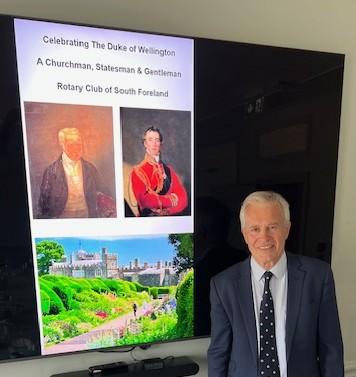
A Presentation on the Duke of Wellington – 8th May 2026
This was given by Richard Warden, a man of many talents. He has been an army chaplain, a school chaplain and a curate in London. He was Head of Religion and Senior Chaplain at Wellington College, them taught at Millhill before retiring in 2021.
Richard developed a great interest in the Duke of Wellington who he referred to as ‘a churchman, statesman and gentleman,’ as well as having a distinguished military career.
Born in Dublin in 1769 as Arthur Wellesley, his military career began in 1787 and he also became an MP in the Irish House of Commons. He was to be one of the leading military and political figures in the early Nineteenth Century, becoming Field Marshall, and then Commander-in-Chief of the British Army, a title he retained until his death in 1852. He was Prime Minister twice, from 1828 until 1830 and again in 1834. From 1829 until 1852 he was Lord Warden of the Cinque Ports and spent as much time as he could at Walmer Castle.
Richard’s talk was notable for giving us an insight into the character and personality of the Duke of Wellington rather than an account of his military and political career.
Walmer Castle was a special place for the Duke and he attended the local church of St Mary’s for 23 years. He became well known for falling asleep during sermons. He was deaf as a result of military action and sometimes had to be woken. Many local people wanted to attend the same church as the Duke so it was extended to accommodate them. The Duke was prayerful, humble and received the sacraments. He liked to study religion and philosophy. He believed that the Lord’s Prayer contained morality and that the golden rule was to live without doing harm to others. He didn’t execute Napoleon and forbade destruction and pillaging by his troops after victory. He was unafraid of battle but didn’t glory in war; he saw Waterloo as a great tragedy and an immense loss of life. He held that it was good to know when to retreat.
He was at Walmer Castle virtually every autumn from 1829 and become a familiar sight around the area including shopping in Deal. He liked the local people and was known for showing children around the Castle grounds and giving them a sovereign each. He often went to the windmill at Ripple, where he enjoyed talking to the miller. On local excursions he had a sword hidden in his umbrella, as a precaution.
He liked the position of Walmer Castle by the sea as he could see how close the French were just over the channel. As a grandfather he loved his grandchildren and enjoyed playing with them on the battlements. They visited him just before he died, sitting in his chair in his room at the castle on 14th September 1852.
The Duke was generous to local people and also to a number of orphanages. He was Chairman of the Christian Arts Trust which gave grants towards projects for the Christian faith, including a National Competition of sacred music for youngsters.
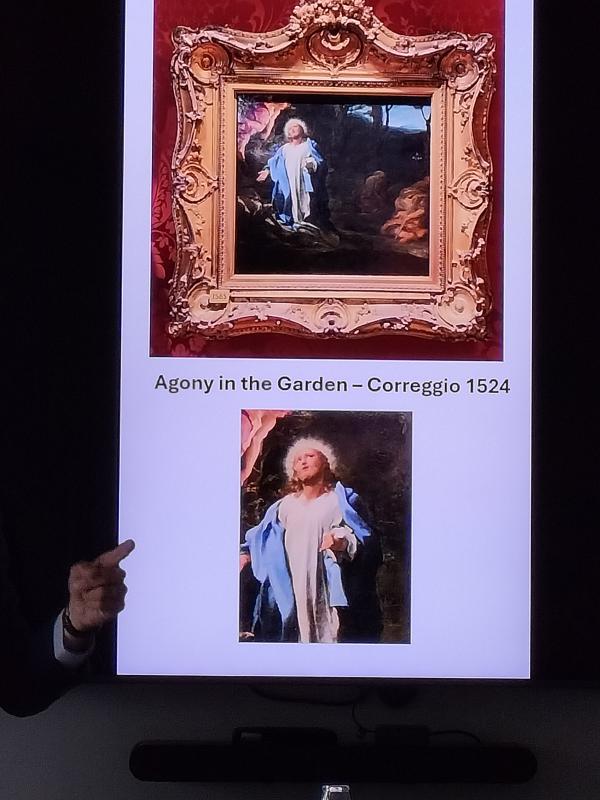
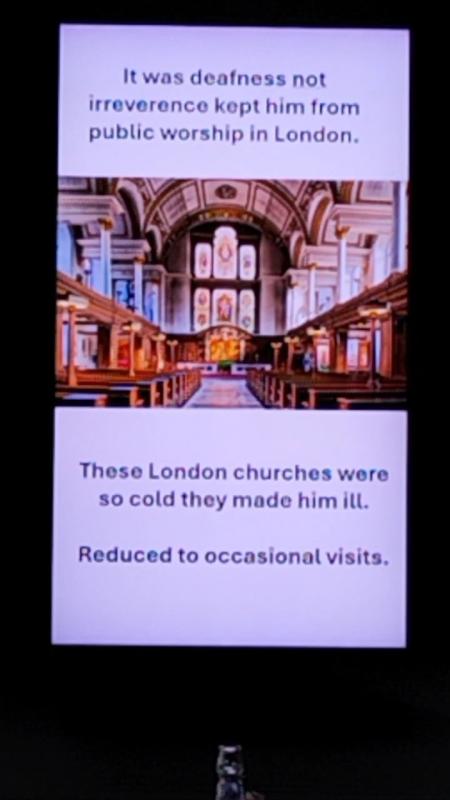
In London he lived at Apsley House at Hyde Park Corner where his favourite painting was to be found: the ‘Agony in the Garden’ by Correggio 1524. The Wellington Arch was nearby and there used to be a statue of Wellington’s horse, Copenhagen, on top of the arch, but after Wellington’s death this was moved to Aldershot. Wellington hardly went to church when in London, not because of irreverence but because of his deafness and feeling ill if he attended any large London church.
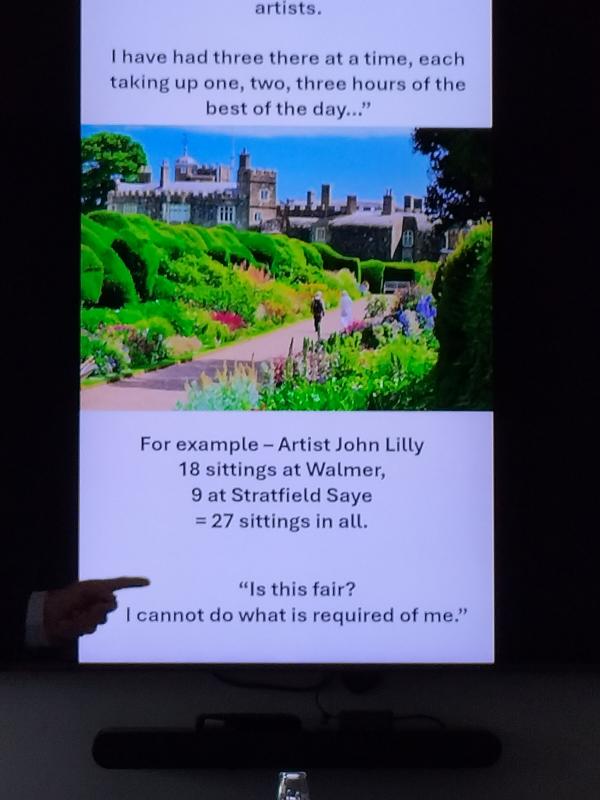
Many things were named after Wellington including roads, bridges, docks, clocks, schools and boots. He was the most portrayed of Nineteenth Century people and many artists visited Walmer Castle to paint his portrait. His image appeared on a £5 note and statues of him can still be found all over the country.
His funeral procession in London was seen by half a million people and 10.000 attended his funeral in St Paul’s Cathedral where he is buried.
'What We Do' Main Pages:
March/April Newsletter for 2026
more