A talk by Rev. Simon Barnes
Thu, Feb 5th 2026 at 7:00 pm - 9:00 pm
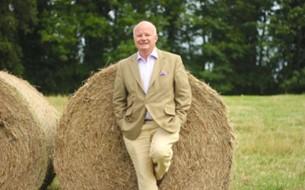
The Rev. Simon Barnes, who splits his time between Priston and the USA.
He is a former CEO of Send a Cow and will be speaking to us.
Club members please log in for more information.
Simon explained that as well as having been CEO of the ‘Send a Cow’ charitable project which many of his listeners remembered as being a novel way of attracting charitable funding for developing countries, he has also headed multiple American charities, including the Bible Society. To add to that, he is also an ordained Episcopal priest, as well as being an Anglican priest. As a dual citizenship he has lived half his life in each country – although the differences in legal systems means that he can only act as a magistrate in the UK.
His broad understanding of the systems and cultures of both countries mean that his main activity currently, is to work with UK charities who wish to establish a presence in the US. Over the years he has developed connections with influential leaders in industry, politics and the Church mean that he is uniquely well placed to help UK charities understand where there are opportunities in the USA. And yet . . . some of what is currently happening is almost beyond belief. The speed of change in the USA is staggering, and nearly all of it down to one man – the President. Apart from the fact that the country has elected a minor TV personality, a failed real estate mogul and a convicted criminal to be the world’s most powerful individual, the speed with which established norms and institutions are being ignored or discarded is staggering.
Simon explained how he had – almost accidentally – found himself rubbing shoulders with the great and the good of the USA. As an undergraduate in London, he had eked out his university grant by acting as a diplomatic courier. With a diplomatic bag handcuffed to his wrist, two nights in a hotel paid for and an air ticket to wherever the bag needed to go as well as £50 expenses per trip, this was a very comfortable way to make short trips abroad. He quickly worked out that if he wore a good suit, there was an excellent chance he would be upgraded. Already a fan of New York, he became a regular on the United Nations diplomatic run. A friend of his was working as a nanny so he could stay with her on the Upper East side. He worked often for Arthur Schlesinger who had been a special adviser to President Kennedy and whose book about the USA had as its working title ‘The Disuniting of America’ which is perhaps even more apt today – and why Simon has chosen it as the title of today’s talk.
Equipped with a decent suit, a British accent and a voracious interest in what was going on politically, Simon was often invited by Mr and Mrs Schlesinger to join their friends and colleagues to dinners where intense discussions about politics took place.
For at least the previous 250 years, the USA had prided itself on the welcome it gave to incomers. Nineteenth century writers such as Herman Melville commented that ‘You cannot spill a drop of American blood without spilling the blood of the whole world.’ His contemporary Ralph Waldo Emerson wrote about the new race of Americans, blended from all other nations. Immigrants were welcomed as people seeking an opportunity to thrive – Americans saw themselves as creative, generous and patriotic. They were energetic, often with a pioneer ‘can-do’ spirit and a strong sense of their own identity.
Their relationship with Great Britain has always been ambivalent, since the War of Independence. Most of their national structures – laws, traditions and language derive from UK with English still being the dominant language. However, the line ‘Two nations, divided by a common language’ which sums up the tension beautifully, is of uncertain origin. Possible claimants include Oscar Wilde, George Bernard Shaw and Winston Churchill. One example of this ambivalence is the Episcopal Church which embodies that British link. As a Denomination it is tiny in terms of adherents compared with others such as Baptists, Presbyterians and even Catholics – but it has the best real estate (including The National Cathedral), the largest pension pot and can claim more Presidents than any other Denomination.
Despite all their impatience with the English, Americans still valued the English accent, traditions, history, culture – and the monarchy.
All this began to change from the 1970s to the 1990s. There began a shift to multiculturalism and all things traditionally western were questioned – and in many cases, done away with. This led in some cases to the abdicating of responsibility and
all moral norms for example in letting ‘mixed visiting’ take place in boarding schools. The repercussions from this led to a change in the landscape across private schools, overnight, not for any moral reason but rather because of the fear of prosecution.
Until this point, the genius of America had been seen as its ability to forge a single nation – but then its culture and history began to be re-examined. For example, Monument Avenue in Richmond Virginia has only empty plinths where before there had been statues to Confederate heroes. The only one remaining is to the famous tennis player, Arthur Ashe. A similar reappraisal of former local heroes can be seen in the dramatic removal of the statue of Edward Colston in Bristol but thankfully has not been taken further.
President Trump’s Make America Great Again (MAGA) movement is the antithesis of the left-wing Democrats, those of any sexual orientation other than heterosexuals, gun control and the rights of women to abortions etc. It has polarised the nation like never before. There are very few moderates, and those Republicans who speak out against the regime are often not planning to stand again for election.
Trump is clearly limited in his world view coupled with a huge ego, but despite his obvious drawbacks he is no fool. He has the ability to make deals and so should not be underestimated. One of his opponents, the newly elected mayor of New York is fluent in six languages and politically very able – but this may not be enough to stand up to the power of the president.
There are three reasons why Great Britain is not likely to become so polarised, even with the ever-present threat of Reform. The first is that as well as parliamentary democracy, we have a monarchy so the power of the Prime Minister is never as unconstrained as that of the President of the USA. There is no equivalent to the President’s Executive Orders. The second is that for all the concern about bias at the BBC, in general media bias in the UK is much less than in the USA, exhibited in the contrasting views of FOX and CNN. And lastly, despite doubts about the fairness of the first past the post voting system, the UK does have the advantage of credible third parties, not just the mainstream parties of the right and the left.
For all that, and the greater number of checks and balances in the British system, there is no room for complacency. Mark Carney, sometime Governor of the Bank of England and now Prime Minister of Canada, summed it up recently in his speech at Davos. He asserted that the ‘traditional rules based system is over and will not return’ and further, that weaker countries than the USA ‘must collaborate to be not on the menu, but at the table’ – in other words, the only strategy is for concerned countries such as ours to counter the fracturing of the USA by developing their own partnerships with other countries that share their values to fill the void left by America.
'What We Do' Main Pages:

Precious Sisters keeps in touch with the supporters and students during the pandemic and school closures
more

The Bathavon Rotary Club newsletter 'Roundabout' provides reports on recent activities and lists upcoming meetings and events.
more
.jpeg)

Bathavon club member Keith has been to Sri Lanka supporting Tea Leaf Vision in their education initiatives, particularly helping English language teachers
more